


Christmas Fabric for Stockings How to Choose and Sew Fast
You've got a stack of holiday prints on the cutting table, a family set to finish, and far less sewing time than you hoped. The right Christmas fabric for stockings can make that deadline manageable. The wrong choice can leave you fighting frayed edges, a floppy cuff, or a lining that puckers after laundering.
I choose fabric by the stocking's job first, then by color. An heirloom stocking needs a stable woven base, a fast beginner project benefits from quilting cotton, a quilted version needs compatible batting and backing, and a luxe decorative stocking can handle velvet or cable knit with extra stabilization. That decision affects cutting efficiency, seam allowance, appliqué placement, and how quickly the stocking comes together.
Christmas stockings have a long material history. Practical everyday socks gradually became decorative holiday objects by the nineteenth century, and Clement Clarke Moore's A Visit from St. Nicholas, published in 1823, helped popularize stockings hung “by the chimney with care” (historical background on handmade Christmas stockings). Industrial textile production later made purpose-made cloth stockings accessible to middle-class homes, while home sewing kept fabric choices personal.
Why Christmas Fabric for Stockings Matters for Beginners
A stocking has more demanding areas than its simple silhouette suggests. The toe and heel curves need a fabric that can turn cleanly, the cuff needs enough body to stand neatly, and the hanging loop must tolerate repeated handling. A tight weave with minimal fraying is usually easier for a first project than a loose decorative textile.
For a time-crunched maker, quilting cotton is the dependable default. It has a stable hand, presses sharply, supports precise piecing, and works well with fusible interfacing. I've handled many holiday prints at the cutting table, and the difference is obvious: a firm quilting cotton stays flatter around the toe curve, while a loose weave starts shedding threads before the first seam is complete.
Start with the project goal
Choose one of these four directions before shopping:
- Heirloom: Select a tightly woven cotton, wool, or linen with a lining that supports the outer shell without adding bulk.
- Fast beginner: Use quilting cotton for both the outer and lining, with simple appliqué or a shaped cuff.
- Quilted: Combine patchwork or quilt-as-you-go strips with low-loft batting and a stable backing.
- Luxe decorative: Use velvet, cable knit, or a rich textured fabric, but stabilize areas that will be sewn, turned, or loaded with trims.
Ruby Star Society prints bring crisp modern motifs and lively color, while Kona Cotton solids offer a smooth, reliable background for appliqué and cuff construction. If you're building a beginner-friendly supply drawer alongside this project, the quilting supplies for beginners guide is a useful place to organize the basics.
Fabric choice also controls sewing speed. A medium-weight woven cotton typically needs less wrestling than velvet, and it won't demand the same nap matching or edge management. That doesn't make textured fabrics a poor choice. It means they belong in a project where their visual payoff is worth the slower construction.
Choosing the Right Christmas Fabric by Project Goal
The best Christmas stocking fabric depends on whether the stocking will be washed, filled, displayed, or treasured. Lining should be the same weight as the outer fabric or lighter, never heavier, because a bulky lining can distort the opening and make turning difficult.
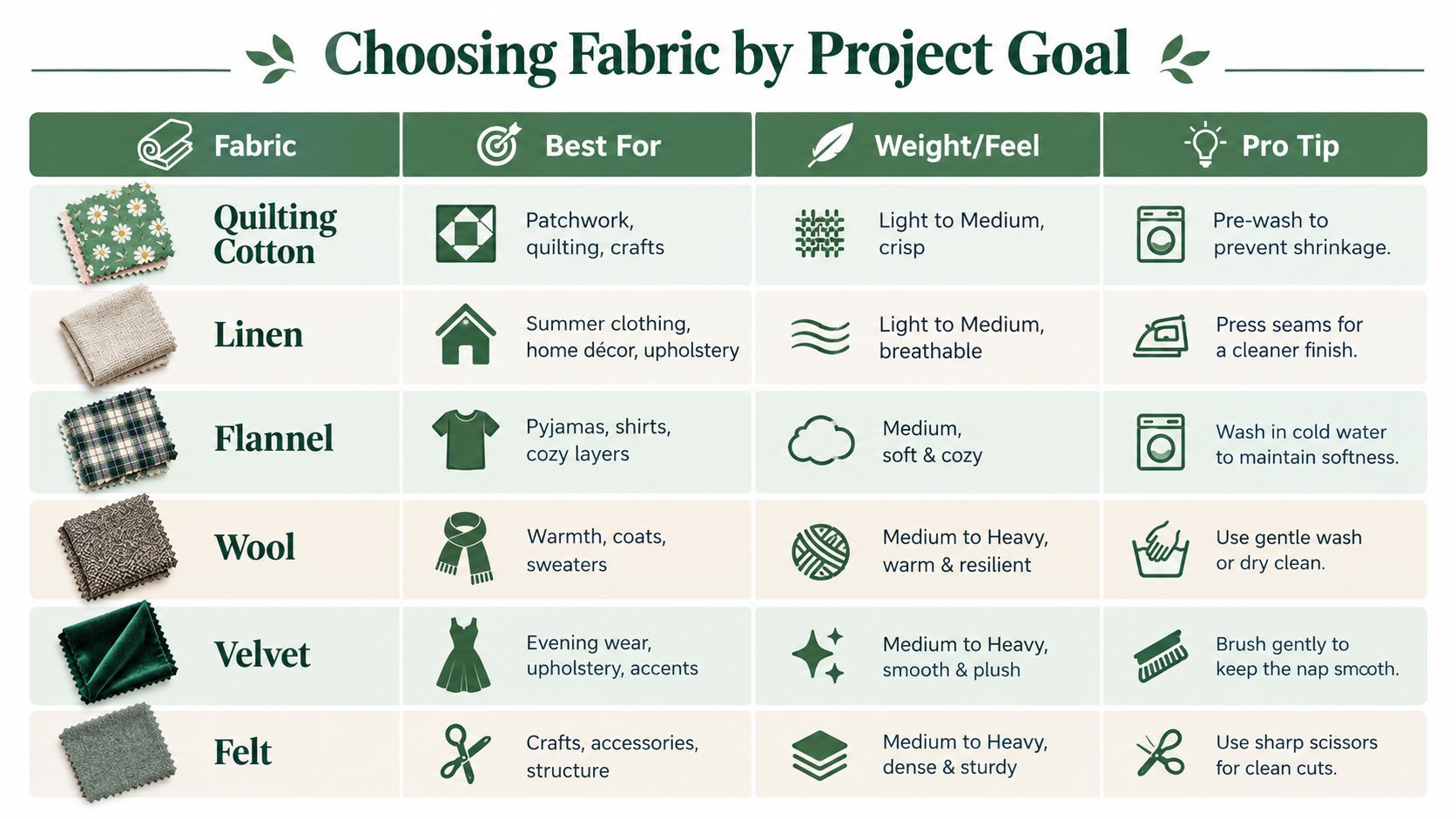
Use-case selector
| Fabric Type | Durability and Drape | Fraying and Sewability | Best For |
|---|---|---|---|
| Quilting cotton | Stable, medium body, holds shape | Easy to cut and stitch, moderate edge fray | Patchwork, beginner stockings, washable family sets |
| Linen | Natural drape, can soften with use | Frays more readily, benefits from careful seam finishing | Heirloom texture and rustic designs |
| Flannel | Soft, cozy hand, moderate body | Manageable, though nap and lint need attention | Warm linings and comfortable decorative stockings |
| Wool | Resilient, warm, structured | Edges may be easier to manage than loose woven cotton | Heirloom and traditional stockings |
| Velvet | Plush surface, fluid or heavy depending on type | Slippery pile complicates cutting and stitching | Luxe cuffs and display-only stockings |
| Felt | Firm, nonwoven hand, no woven grain | Minimal woven fray, easy for appliqué shapes | Fast decorative panels and shaped motifs |
Other fabrics have more specialized roles. Cable knit gives a sweater-like surface but can stretch at seams, burlap creates a rustic look but has an open weave and pronounced fraying, and printed cotton patterns offer easy coordination. Pre-quilted cotton can save construction time because the layers are already joined, although its thickness needs to match the pattern's seam allowances.
Heavier doesn't automatically mean better. A thick outer shell can make the toe and heel bulky, strain the cuff seam, and complicate turning. Muslin is often discouraged for stockings because it's thinner and less durable, while a lining thicker than the exterior can make the finished shape feel crowded.
Choice Fabrics and Blank Quilting offer useful directions for traditional and seasonal palettes, but the label matters less than the fabric's actual hand. Rub the cloth between your fingers, check whether the weave shifts easily, and consider whether its drape suits the stocking's purpose. For coordinated family colorways, Christmas fabric by the yard helps you plan outer shells, cuffs, and linings as one set.
Prepping Fabric So Your Stocking Keeps Its Shape
A stocking that looks crisp on Christmas morning starts with fabric prepared before the first cut. For quilting cotton, finish the raw edges, wash and dry the cloth using the care routine planned for the finished item, then press it flat. The process limits later size changes and keeps the outer shell and lining working together.
Untreated cotton changes most during its first wash. General cotton references place first-wash shrinkage at about 3–5% in length and 1–3% in width, while quilting cotton is often estimated at 2–3% lengthwise and 1–2% widthwise (fabric shrinkage guidance). Polyester is usually under 2% shrinkage, yet a cotton outer paired with a stable polyester lining may still pucker because the layers respond differently (Christmas stocking construction and care reference).
A practical preparation checklist
- Finish raw edges: Serge or zigzag the cut edges before laundering. This matters even more with loose-weave cloth.
- Wash and dry deliberately: Match the water temperature, cycle, and drying method to the finished stocking.
- Press flat: Remove wrinkles without stretching the cloth, then square the grain before cutting.
- Test a swatch: Cut a 6-inch square, measure it before and after laundering, and compare the results using the method described in the fabric shrinkage guidance.
- Stabilize where needed: Add fusible interfacing to the outer shell or appliqué areas when the fabric feels loose, flexible, or heavily decorated.
Flannel needs a quick inspection too. A layer cake flannel piece can be convenient for coordinated family projects, but its brushed surface and looser weave may shed more than quilting cotton. Keep the nap facing consistently and allow for its thicker hand when matching seams.
I test the weave before cutting a full family set. Firm quilting cotton usually shows slight edge fuzzing after zigzagging, while linen or burlap may keep shedding around the pattern. Heat creates the largest risk, so hot washing and high dryer temperatures should be avoided unless they match the intended care routine.
Yardage and Cutting Guide for Single and Family Sets
A single heirloom stocking needs a different buying plan from a fast beginner project. Start with the pattern pieces, then choose a format that matches the project goal. A small stocking may use a stock cut around 11 x 14 inches. A fat quarter can often provide the outer shell for a typical pattern, while a fat eighth suits a panel, cuff, or accent. A fat quarter is a pre-cut quarter of a fabric yard, and a fat eighth is smaller.
| Format | Outer Fabric | Lining and Batting | Makes |
|---|---|---|---|
| Small stocking | Approximately 11 x 14 inches per cut area | Cut a matching lining; add low-loft batting if desired | One small stocking |
| Fat-quarter outer shell | One fat quarter, depending on pattern orientation | Coordinated lining plus 1/4 yard low-loft batting | One stocking or selected panels |
| Fat-eighth panel format | One fat eighth per panel | Add lining, batting, cuff, and loop materials | One panel-based stocking |
| Quilt-as-you-go format | Strips, often using 12–13 fabric strips | Fusible batting, binding, and ribbon | A structured stocking assembled from strips |
Treat these quantities as planning starting points. Directional prints, nap, large motifs, and seam allowances can change the layout. For a family set, cut one complete sample first. Place its paper pieces on the intended precuts, then repeat the layout for each stocking. The fabric yardage calculation guide can help check the total before buying.
Match the format to the project
For a fast beginner stocking, a fat-quarter outer shell and coordinated lining keep cutting straightforward. An heirloom set benefits from firm quilting cotton, careful motif placement, and enough extra fabric to align directional prints. A quilted version works well with strips over fusible batting, while a luxe decorative stocking can reserve the strongest print for the front and use a solid cuff or quieter lining.
Quilt-as-you-go construction uses strips in a controlled sequence and makes compatible scraps useful. Keep the outer shell, lining, cuff, and hanging loop visually related, but let them come from different prints when that reduces waste.
Backing can limit the layout when a stocking has many quilted sections. Use one fabric for the front, another for the back, and a solid cuff to stretch the available yardage. For repeatable cuts, you can shop precut fabric rolls, then confirm the pattern's grain direction and seam allowance before cutting the full family set.
Sew a Fast Christmas Stocking Without the Hassle
The quickest reliable build uses a stabilized outer shell, a compatible lining, and a simple cuff. Start by applying Pellon fusible interfacing to the wrong side of the decorative outer fabric, especially if the print is lightweight or the stocking will carry dense trim. Position appliqué pieces after stabilization, then secure their edges with a zigzag stitch to reduce fraying and edge lift.
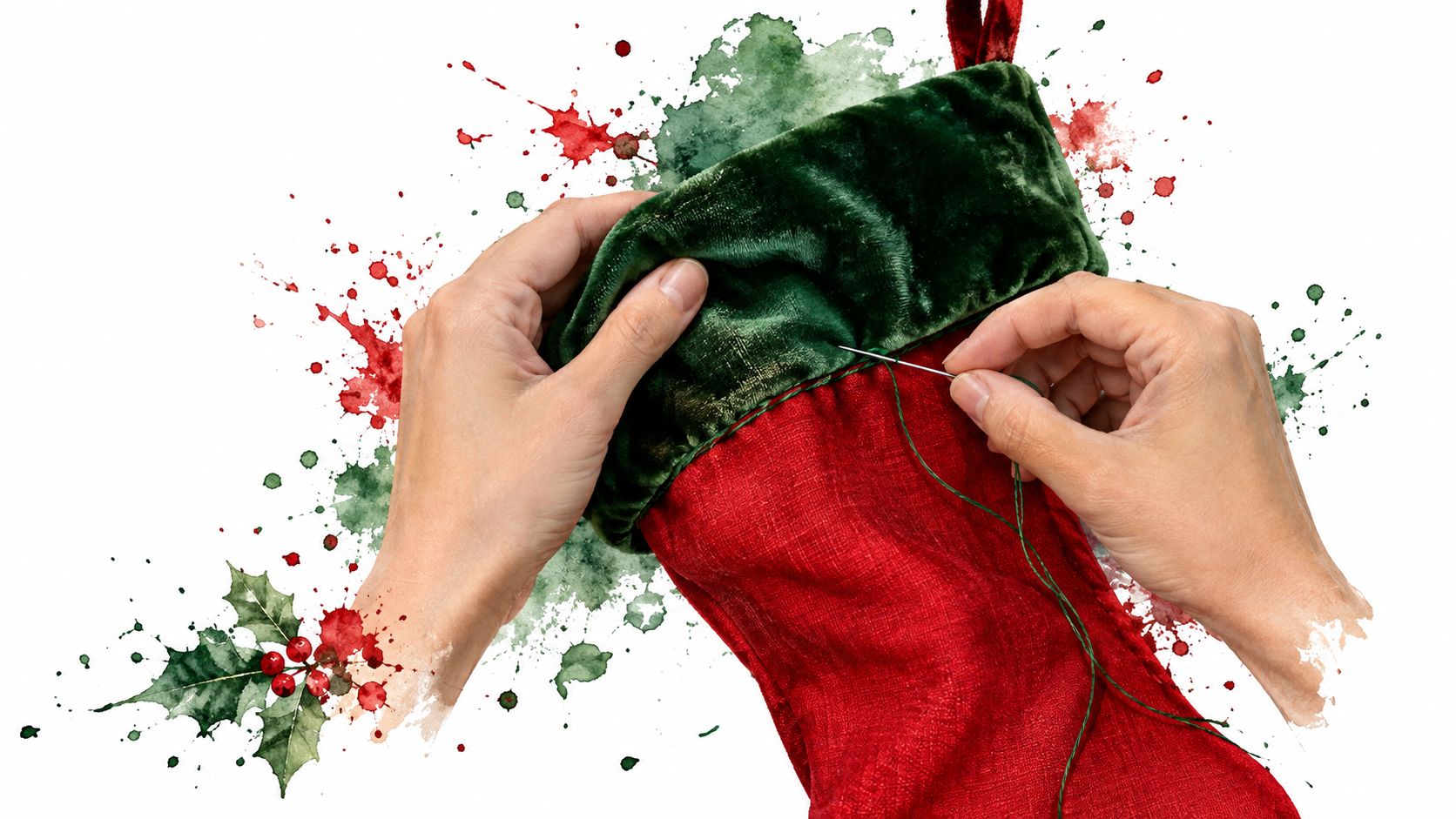
Layer the outer shell, batting, and lining according to the pattern, keeping right sides oriented correctly. A seam allowance is the space between the raw fabric edge and the stitching line. Marking it around the toe and heel curves helps beginners sew a consistent shape rather than gradually narrowing the stocking.
Sew slowly around the curves and clip the seam allowance afterward so the fabric can spread when turned. Use small V-shaped notches on tighter curves, taking care not to cut the stitching. With low-loft Hobbs 80/20 batting, the stocking gains body without becoming difficult to turn, and the quilting stitches retain useful stitch definition.
Keep the layers under control
- Nest seams: Offset bulky seam intersections slightly so the cuff and back seam don't stack in one thick ridge.
- Manage tension: Test topstitching on a scrap. Balanced upper and bobbin tension keeps the line smooth across cotton and batting.
- Control curves: Clip gradually, turn with a point turner, and press from the outside without flattening textured fabric.
- Finish the cuff: Join the cuff seam, fold it with wrong sides together, and align its raw edges with the stocking opening.
- Add the loop: Place the hanging loop at the back seam before closing the cuff seam, then stitch securely through the aligned layers.
Practical rule: If the presser foot starts pushing the toe curve instead of feeding it, stop, lift the foot, smooth the layers, and continue. Forcing the curve usually creates a flat spot.
After turning, push the toe and heel into shape and under-stitch carefully where the lining wants to roll outward. If you use temporary adhesive for batting or appliqué placement, consult the 505 adhesive spray project guide and test it on a scrap first. The finished stocking should feel structured, not stiff, with a cuff that folds cleanly and a lining that stays inside.
Styling Variations and Your Next Ready to Sew Kit
The same stocking pattern can serve several project goals. For an heirloom family set, use patchwork, a stable cotton outer layer, and a lining that matches the shell's weight. For a fast beginner project, choose one firmly woven cotton, a simple cuff, and minimal appliqué. Quilted stockings gain texture from quilt-as-you-go strips and make useful projects for small fabric pieces.
A luxe decorative stocking can take a velvet cuff or cable knit, but both need careful handling. Velvet adds a formal finish and can shift while sewing. Cable knit supplies sweater texture and may stretch at the opening. Burlap suits a rustic, display-only stocking if you accept its open weave and fraying.
I've tested smooth solids beside busy novelty prints. The contrast makes appliqué easier to read. Ruby Star Society prints suit a modern, graphic palette, while Kona Cotton solids provide a clean surface for cuffs and lining panels without competing with the motif.
Choose a coordinated set
- Traditional red and green: Pair a seasonal print with a solid cuff and dark lining.
- Winter white: Combine cream, soft gray, and pale blue. Add texture with flannel, wool, or cable knit.
- Modern minimalist: Use a solid outer shell, one small appliqué, and a contrasting hanging loop.
- Collegiate gifting: Repeat the same lining and vary durable team-color cuffs so each stocking is easy to identify.
- Scrap-led patchwork: Keep the background consistent while changing the small feature prints.
For adjacent holiday sewing, a seasonal table runner collection can extend the same palette across the room. If a larger quilted project needs backing, 108-inch wideback cotton avoids piecing the backing fabric. QuiltKit.com also offers coordinated bundles and ready-to-sew formats, which can reduce fabric matching before cutting.
Care, lining, and fabric stability usually determine whether a finished stocking holds up. Pre-wash cotton, match the lining weight carefully, and stabilize decorative fabrics before stitching.
Ready to make a matching set? Review coordinated bundles, seasonal fabric, batting, and ready-to-sew quilting supplies at quiltkit.com. The Email Sign-up Savings can help you plan the next stocking project with less cutting-table guesswork.