


Christmas Table Topper: A Beginner's Quick Guide
December arrives with a crowded kitchen, a half-finished gift list, and a table that needs one more thoughtful detail. A Christmas table topper gives you the handmade look of a quilt without committing to a full-size project, especially when the fabric, batting, and pattern are already coordinated.
The practical choice is a ready-to-sew kit or a carefully planned precut project. You'll still make the important decisions about quilting and finishing, but you won't lose an afternoon matching prints that were never meant to work together.
Your Cozy Holiday Project Awaits
A Christmas table topper is a compact quilted piece designed to anchor a centerpiece, protect the table surface, or add a seasonal layer beneath serving dishes. The most successful versions combine tight-weave cotton, stable batting, and simple quilting, so the finished piece looks polished without becoming precious to use.
Practical rule: A holiday topper should be decorative enough for the dining room and sturdy enough to survive crumbs, warm dishes, and repeated folding.
I've stood at the cutting table in December with a stack of beautiful fabrics and no clear plan. The trouble wasn't sewing. It was choosing a background, finding a compatible backing, calculating batting, and discovering that the “perfect” print needed more yardage than I had. A ready-to-sew kit removes much of that friction while leaving room for personal choices in thread, quilting texture, and binding.
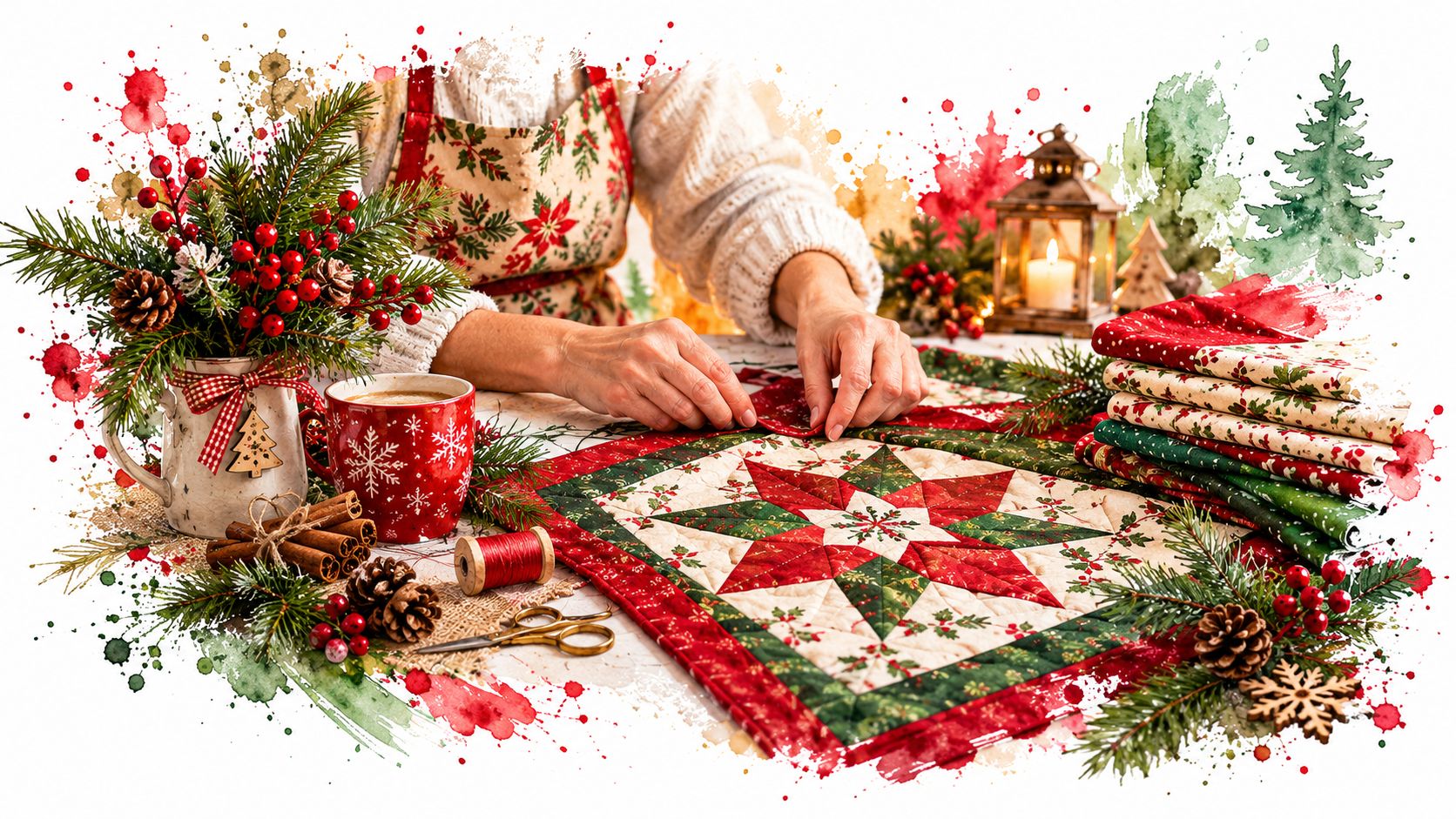
Holiday table linens also have deeper roots than many makers realize. A documented history of holiday tablecloth traditions describes white linen used for Christmas Day in 18th-century New England, including a 1773 household ledger entry for “two yards of Osnaburg linen, 28 inches wide, for Yuletide covering.” The same source cites a textile-history study reporting 92% structural integrity after 115 years for embroidered linen tablecloths washed twice yearly, compared with 68% fiber degradation after four years for contemporary commercial alternatives.
That history supports a useful modern lesson. Choose fabric for how it will feel and behave after the celebration, not only for how it looks folded on the shelf. For coordinated seasonal yardage and ideas for mixing prints, browse Christmas fabric by the yard.
The wider category has commercial staying power too. The global table runner market was estimated at about US$1.4 billion in 2022 and is projected to reach roughly US$2.3 billion by 2031, growing at a 4.9% CAGR, with themed runners seeing seasonal spikes around holidays such as Christmas, according to table runner market coverage. That makes a Christmas topper more than a one-season craft. It can become a repeatable gift, a yearly decorating ritual, or a small product line for a maker.
Step-by-Step to a Perfect Topper
To make a reliable Christmas table topper, cut the top accurately, oversize the batting and backing, layer without trapped air, baste securely, quilt with controlled tension, and trim only after quilting. A consistent quarter-inch seam allowance, flat sandwich, and careful binding matter more than a complicated block design.
Prepare the layers
Start by cutting the focal block or pieced panel according to the pattern. Press each seam as you go, and check that nesting seams meet cleanly before joining rows. “Nesting” means placing adjoining seam allowances in opposite directions so the intersections lock together rather than forming a bulky ridge.
For a practical allowance, the batting and backing should extend at least 1 inch beyond the finished topper on every side, as described in this batting placement guide. One published method squares its center panel to 18 inches, then cuts batting and backing to about 30 inches square before layering, basting, quilting, and trimming. The extra fabric absorbs small shifts and protects the edges from distortion.
Quilt with control
Lay the backing wrong side up, place the batting smoothly on top, and position the quilt top right side up. Baste from the center outward, checking for wrinkles and air pockets. A walking foot helps feed the layers evenly, particularly when the batting has noticeable loft.
Straight lines or a loose meander usually provide enough texture for a table piece. Dense quilting can look impressive, but it may stiffen the topper and make the surface less comfortable beneath dishes. Watch your machine tension as you work. Balanced stitches should sit cleanly on both sides without pulling the top thread into the batting.
Finish the perimeter
After quilting, square the unit and trim the edges neatly. Leave the binding allowance required by your pattern, then attach the binding with an even seam and fold it around the edge. The corners deserve patience. Reduce excess bulk before turning, but don't cut into the stitching line.
For a fast finish, a quilt-and-turn construction can work well. One documented method uses a 20-inch by 20-inch batting and backing square for a small focal-block project, then stitches around the perimeter with a 1/4-inch allowance, leaves a 3-inch opening, turns the piece, and closes the gap. It's a useful alternative when you want a flat decorative finish without separate binding.
Choosing Your Fabrics and Batting
Fabric choice controls precision, while batting determines loft, drape, warmth, and stitch definition. For a Christmas table topper, the most dependable combination is a stable quilting cotton paired with batting that gives the piece body without making it bulky beneath plates and decorations.
Kona Cotton solids are a practical choice for backgrounds and borders because their tight weave supports accurate cutting and produces minimal fraying during piecing. Ruby Star Society prints bring more visual movement, with saturated motifs that suit both traditional holiday palettes and modern jewel-tone designs. I've found that a crisp solid beside a larger-scale print gives the eye somewhere to rest, especially when the topper includes several pieced blocks.
Compare the batting options
| Choice | What it does well | Trade-off |
|---|---|---|
| Hobbs Bonded Fibers 80/20 cotton-poly | Offers pleasant drape, warmth, and enough loft for visible quilting | Can feel less sharply defined than a crisp cotton batting |
| Pellon 100% cotton | Gives clean stitch definition for detailed quilting | May produce a flatter, more structured result |
| Two batting layers | Adds body when the topper will sit beneath dishes or decor | Increases thickness and requires careful basting |
| 108-inch wideback cotton | Simplifies backing for broad quilted pieces | May leave more unused fabric on a small topper |
My hands-on preference depends on the design. For relaxed meandering, Hobbs 80/20 gives a soft drape. For intricate lines or applique outlines, Pellon 100% cotton makes the stitches easier to read. If you want a fuller centerpiece, two layers can work, but test the sandwich under your presser foot before committing.
For more guidance on loft, fiber content, and stitch definition, use this comparison of batting for quilted projects. Makers who want to assemble materials separately can also compare Hobbs batting by the yard with a cotton option from Pellon.
Quick Variations and Pro Tips
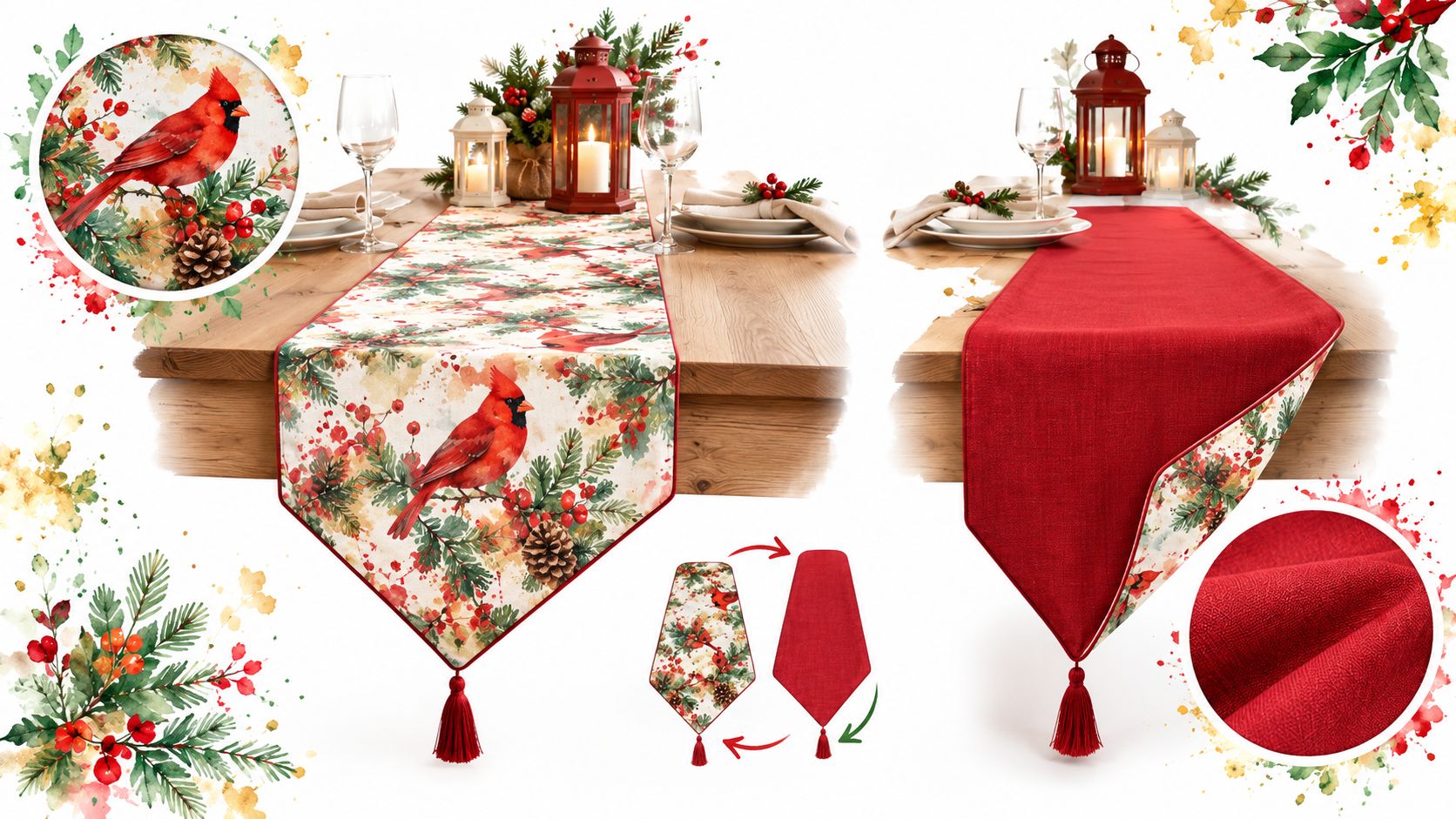
The quickest way to make a Christmas table topper feel more useful is to give it two good sides. Pair a coordinated holiday print with a calm solid, then treat the reverse as a complete design rather than an afterthought. A reversible topper works for Christmas meals, winter gatherings, and gift giving because the recipient can choose the side that suits the room.
Make the project faster
Precut bundles reduce measuring and help maintain color harmony. A charm pack, layer cake, or coordinated strip bundle can become the starting point for a topper when you don't have time to cut a full palette from yardage. If you're comparing formats, the quick and easy quilt pattern collection is a useful place to find small projects with uncomplicated construction.
The 2026 decor direction is also moving beyond only red and green. Stripes, jewel tones, velvet, bows, warm metallics, and natural materials are identified in 2026 Christmas tablescaping trend coverage. You can translate that mood into quilting with a deep emerald solid, a sapphire print, a warm gold accent, or a linen-look neutral.
A few small choices prevent common finishing problems:
- Use a walking foot: It reduces layer shifting when batting has extra loft.
- Press for less bulk: Press seams open when the pattern and fabric allow it.
- Trim before turning: Clipping excess from the corners helps create sharper points.
- Test the binding: A narrow, even finish usually looks more professional than rushed hand stitching.
- Plan for function: For frequent hosting, choose washable cotton and quilting that won't create a stiff surface.
A reversible Christmas table topper can also become a practical gift. The Elf Feet Christmas Table Runner Precut Quilt Kit gives holiday makers a direct seasonal starting point, while a contrasting backing can make the finished piece useful beyond the main celebration.
For sizing, a runner is typically about one-third the width of the table, with at least 6 inches of overhang at each end, according to table runner sizing guidance. The same guidance suggests a 72-inch runner for tables measuring 50 to 60 inches long, and a 90-inch runner for tables 72 inches or longer. Measure first, especially if your topper will sit beneath a centerpiece rather than run the full length.
Finishing Touches and Next Steps
The final pressing often reveals whether a topper feels homemade in the best sense or unfinished. Press the binding carefully, inspect the corners, trim loose threads, and wash only according to the fabric and batting requirements. A clean label on the back can record the maker and occasion, turning a seasonal project into a small family keepsake.
I've learned that the most useful holiday pieces aren't always the most elaborate. A topper with steady quilting, a tight weave, and a binding that lies flat will be reached for year after year, even if the piecing is simple. The Coral Floral Half Square Triangle Table Topper Quilt Kit offers another direction for makers who want a structured topper built around coordinated fabric.
For a dependable final edge, follow this guide to finishing a quilt with a clean binding. You can also choose a seasonal kit, assemble your own Kona Cotton and Ruby Star Society palette, or keep a roll of Hobbs or Pellon batting ready for the next small project.
QuiltKit offers ready-to-sew seasonal kits, precut fabrics, Kona Cotton solids, Ruby Star Society prints, 108-inch wideback cottons, and batting from brands including Hobbs Bonded Fibers and Pellon. Visit quiltkit.com to choose materials for your Christmas table topper, and join the email list for Email Sign-up Savings and early notice of seasonal collections.