


Fabric for Baby Blankets: A Quilter's Guide
You're at the cutting table with a handful of swatches, a baby-themed print, and one practical question: which fabric for baby blankets will feel gentle, survive frequent washing, and suit the way the blanket will really be used? I've learned that the softest swatch isn't automatically the safest or most useful choice. A fabric also has to breathe, hold a seam, tolerate laundering, and match the child's setting.
A baby blanket might be a supervised cuddle quilt, a stroller drape, a floor-time mat, a photo prop, or a post-infancy nap blanket. Those jobs have different requirements, so I separate fiber, weight, weave, and finish before choosing a color. For a helpful overview of fabric families, see this guide to types of quilting fabric.
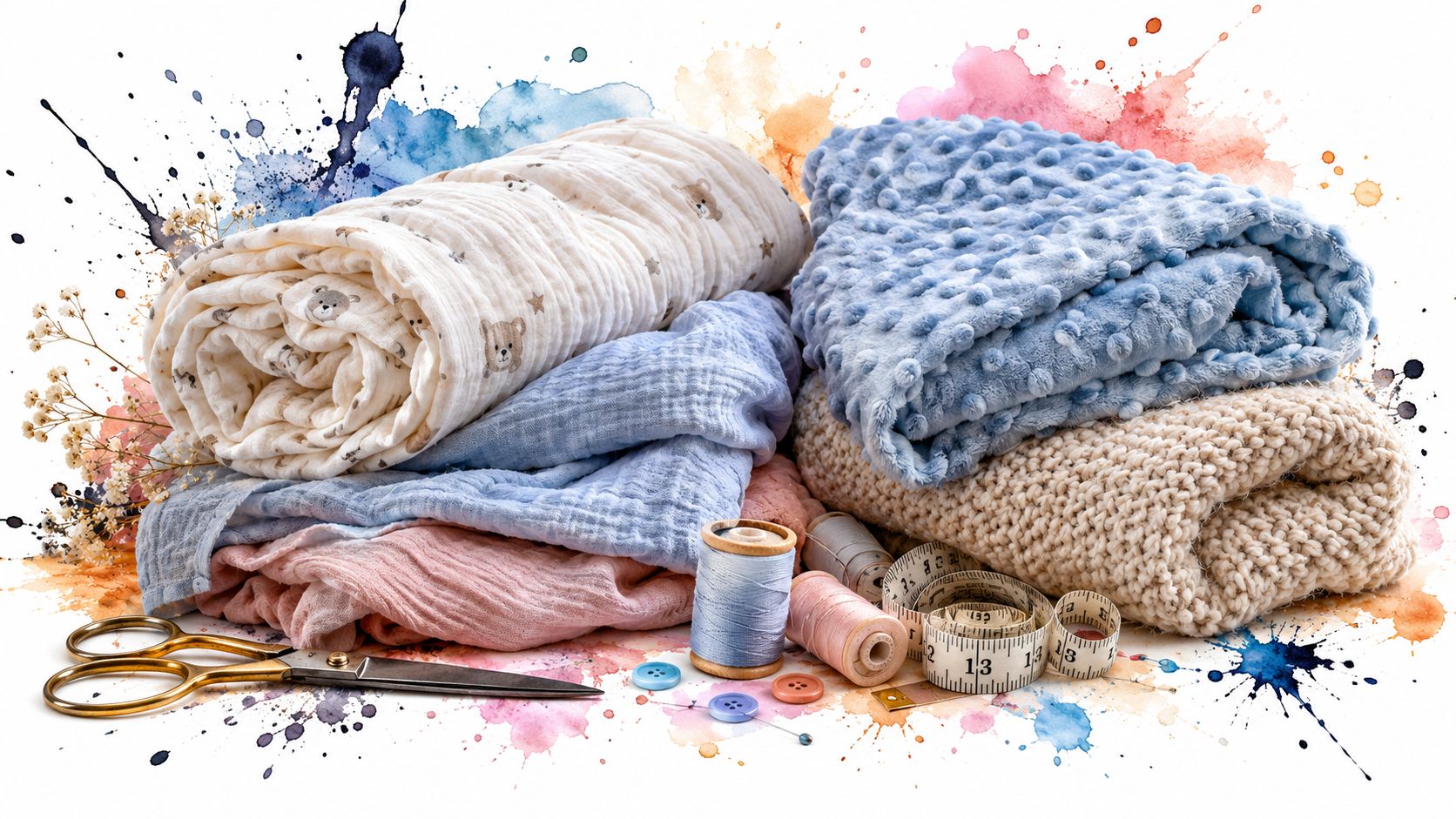
What Makes a Fabric Right for a Baby Blanket
The first requirement is skin comfort. A smooth, tightly woven cotton can feel calm against delicate skin, while a rough print, scratchy label, or stiff finish may make a beautiful blanket unpleasant to use. I run a swatch between my fingers and lightly rub it against the inside of my wrist. That simple test reveals scratchiness better than looking at a product photograph.
The second requirement is washability. Babies bring spills, milk, food, and other messes, so a blanket needs a care routine that fits ordinary family life. Fabric that puckers badly, bleeds into neighboring patches, or sheds after laundering won't remain a dependable gift.
Breathability matters too. Lightweight cotton, muslin, and other airy constructions can feel more comfortable during supervised awake time, while thick batting, fleece, and plush layers retain more warmth. Natural fiber doesn't automatically mean suitable for every use, because thickness, construction, trims, and the child's environment still change the risk.
Practical rule: Choose the use first, then choose the fabric. A stroller blanket can be warmer than a floor-time mat, but neither should be treated as loose crib bedding for an infant.
Durability completes the picture. Quilting cotton's tight weave gives beginners a stable surface for accurate cutting, a consistent quarter-inch seam allowance, and clean stitch definition. Flannel offers a warmer hand, while double gauze and muslin trade structure for airflow.
Comparing the Main Baby Blanket Fabrics
Quilting cotton is the dependable starting point. It usually has a tight weave, minimal fraying compared with loose gauze, and a crisp surface that makes nesting seams easier. Some quilting cottons have a buttery hand, while others feel firmer until washed. It suits patchwork tops, supervised cuddling, stroller use, and gifting when paired with an appropriate backing and batting.
Cotton flannel has a brushed surface and gentle loft, so it feels warmer in a cool nursery or winter stroller. It can shrink more than a stable quilting cotton, which makes prewashing especially important. A coordinated Layer Cake flannel collection can simplify cutting, but always inspect the fabric's care instructions before combining it with another fiber.
Cotton flannelette is similar in purpose, with a soft brushed face and cozy hand. Double gauze and muslin are lighter, more open, and airier, but they can shift while cutting and may resist a sharply pressed seam.
Knits such as cotton jersey and interlock stretch as you handle them. They can work for a soft bound-edge blanket or a serged project, but they're less forgiving for a first patchwork quilt because tension and edge control matter.
| Fabric | Weight | Best season | Beginner friendly |
|---|---|---|---|
| Quilting cotton | Light to medium | Most seasons, depending on layers | Yes |
| Cotton flannel | Medium and brushed | Cooler seasons | Yes, with prewashing |
| Cotton flannelette | Medium and brushed | Cool weather | Usually |
| Double gauze | Light and airy | Warm weather | Moderate |
| Muslin | Light and open weave | Warm weather or layering | Moderate |
| Cotton jersey or interlock | Light to medium and stretchy | Most seasons with suitable construction | Moderate |
| Minky or plush | Plush and warm | Cool-weather supervised cuddling | More difficult |
Minky and plush create a very different result. Their pile feels luxurious, but the nap can hide the grain, edges can shift, and the fabric may need extra pinning or careful basting. I wouldn't make plush the default for a first quilt unless the maker is comfortable managing stretch, shedding, and seam alignment.
How Safety Certifications Actually Work
OEKO-TEX STANDARD 100 Product Class I is a useful screening benchmark for textiles intended for babies and children up to 3 years old. It has the strictest requirements and limit values because young children have sensitive skin and frequent close contact with textiles. OEKO-TEX describes Product Class I and its testing scope here.
A label saying 100 percent cotton tells you the fiber composition. It doesn't, by itself, verify the dyes, finishes, thread, labels, batting, or attached components. STANDARD 100 evaluates the finished textile and its components against more than 1,000 potentially harmful substances, including certain azo dyes, formaldehyde, lead, cadmium, and nickel. The STANDARD 100 FAQ explains the product classes and testing approach.
The practical lesson is simple. Don't certify only the pretty top fabric while ignoring the thread, binding, labels, buttons, or other trims. A baby-contact textile is an assembly, and each component belongs in your buying decision.
Before buying, ask the supplier for:
- Certification scope: Does the documentation cover the finished fabric or only a raw material?
- Product identification: Can you match the certificate to the exact fabric, print, collection, or batch?
- Component evidence: Are thread, batting, labels, dyes, finishes, and trims covered where relevant?
- Care information: Can the textile tolerate the laundering routine the recipient will need?
Certification helps screen chemical exposure, but it doesn't make a loose blanket appropriate for unattended infant sleep. Construction and intended use remain separate decisions.
Supervised Use Versus Safe Sleep for Blankets
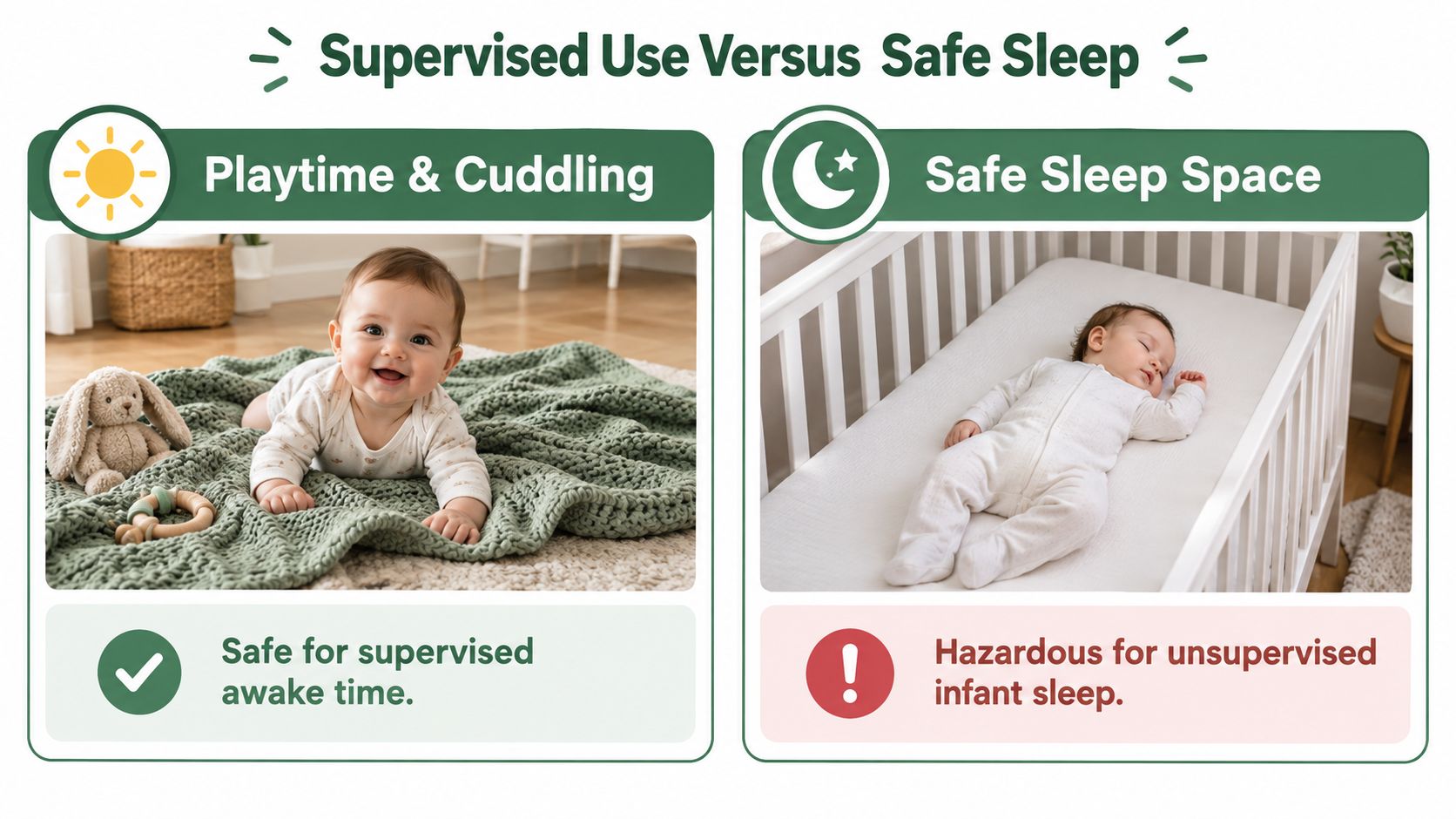
A handmade baby blanket can be lovely for supervised cuddling, floor play, stroller rides, feeding, or post-infancy naps. That use is different from placing a loose quilt in an infant's crib.
The CPSC summarizes infant sleep safety as “bare is best”, meaning a firm, flat sleep surface in a crib, bassinet, or play yard without blankets, pillows, or other objects. The CPSC's infant sleep guidance supports that boundary.
For babies under 12 months, the Safe to Sleep guidance advises keeping quilts, comforters, thick blankets, and other loose bedding out of the crib because they can contribute to suffocation, entrapment, and overheating. A cotton quilt isn't exempt just because the fiber breathes.
For a supervised-use blanket, I favor:
- Lower loft batting: A thinner layer retains less heat and keeps the assembly easier to handle.
- Secure stitching: Quilting and seams should hold the layers together through repeated washing.
- No loose embellishments: Avoid detachable decorations, long cords, and poorly secured trims.
- No weighted inserts: Weighted fabrics and inserts aren't appropriate for infant sleep.
If the gift recipient might use the blanket during sleep, describe it clearly as a supervised-use textile and recommend a correctly sized wearable blanket or sleep sack for sleep instead. More guidance is available in these baby fabric panels and project ideas.
Yardage, Prewashing, and Sewing the Blanket
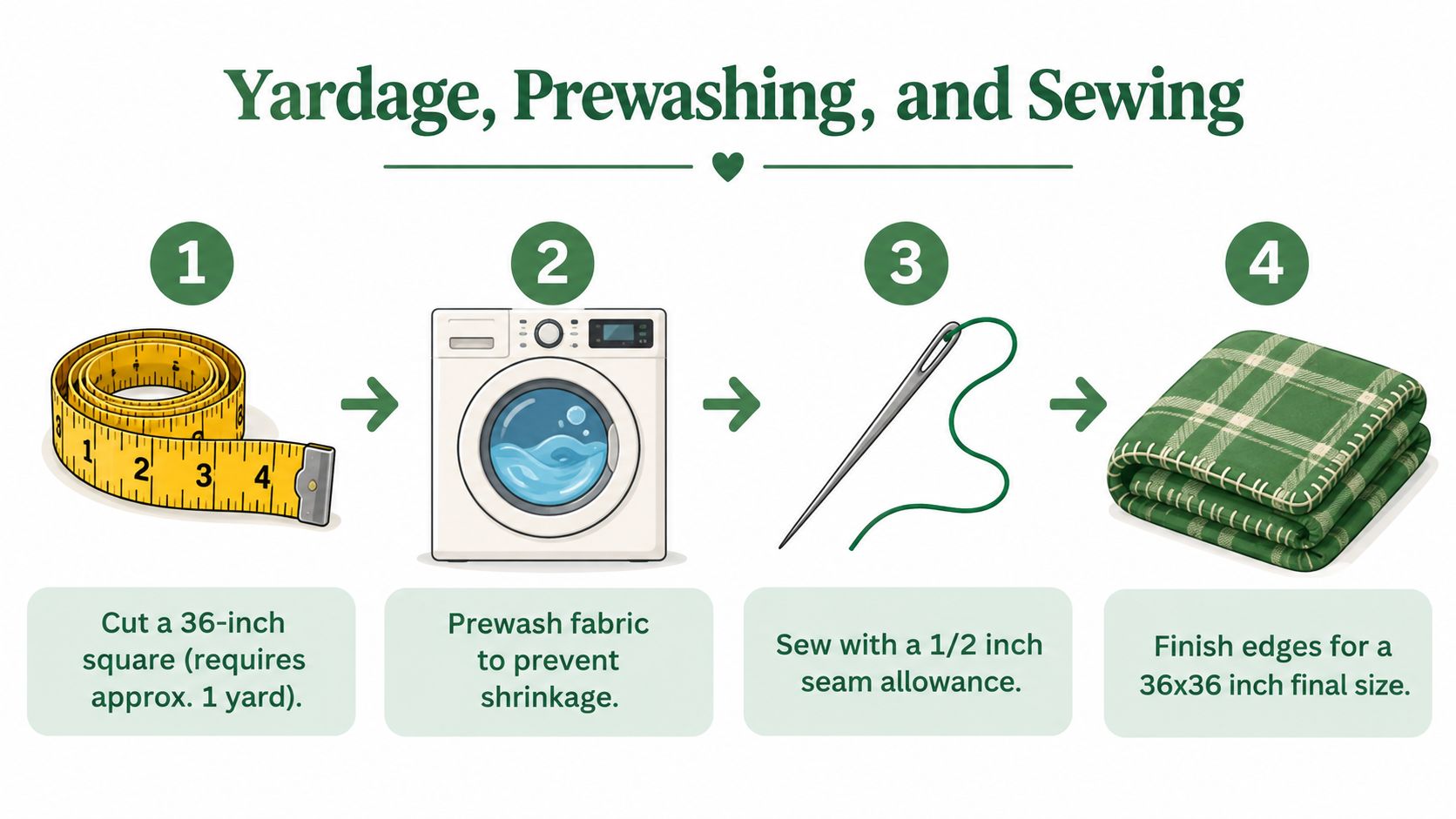
For a simple 36-inch square baby blanket, plan on approximately 1 yard for a cut square, as reflected in this fabric yardage calculation guide. A stroller or nap-sized throw can be scaled to 40 or 45 inches, but larger dimensions require more fabric and may need a different backing plan.
A flannel that shrinks noticeably may justify adding an extra half yard before cutting. The key sequence is cut, wash, dry, and press. Prewashing removes residual sizing and processing substances, exposes color bleeding, and stabilizes shrinkage before the blanket becomes a gift.
For a beginner-friendly construction, keep the layers straightforward:
- Prepare the top: Cut quilting cotton or flannel accurately, then press without stretching the fabric.
- Add batting: A low-loft cotton or cotton blend keeps the blanket flatter and easier to launder.
- Join the seams: Use a consistent one-half-inch seam allowance if that's the measurement in your pattern or construction plan. If you're piecing standard quilting blocks, use the pattern's stated allowance rather than changing it mid-project.
- Nest the seams: Press neighboring seams in opposite directions so the ridges fit together rather than stacking into a bulky bump.
- Finish securely: Bind or turn the edges, then inspect every corner and seam for skipped stitches or loose threads.
A low-loft cotton or 80/20 batting paired with a 108-inch wideback can simplify finishing because the backing can cover a broad quilt surface without a center seam. For a demonstration of the cutting and finishing workflow, use the video below.
Care, Longevity, and Smart Buying Choices
A baby blanket proves its value after the first spill and many washes. Tightly woven quilting cotton and flannel usually keep their shape and provide a stable surface for repeated laundering. Loosely knit or high-pile fabrics may pill, shed, stretch, or change shape more easily. Before cutting the full blanket, wash a small swatch and check for color bleeding, shrinkage, pilling, seam stability, and batting movement.
Follow the supplier's care instructions rather than treating every cotton fabric alike. These fabric care instructions explain what to consider for washing, drying, pressing, and storage.
For a patchwork top, Kona Cotton Solids provide a familiar quilting-cotton structure. Ruby Star Society prints and solids offer a more graphic appearance. For batting, Hobbs and Pellon include cotton and 80/20 choices, along with options such as fusible, black, and roll-by-the-yard batting. A wide backing from Blank Quilting or Marcus Fabrics may reduce piecing when its dimensions fit the project.
Choose materials according to the blanket's use. A quilting-cotton top with low-loft batting suits supervised cuddling and gifting because it is easy to handle and launder. A lighter muslin or double-gauze layer can suit a stroller blanket in warm weather. For any baby item, check the finished textile and its components for suitable certification, such as infant-oriented OEKO-TEX STANDARD 100 Product Class I documentation when available.
If you are comparing fabric, batting, backing, and ready-to-sew options in one place, QuiltKit lists quilting fabrics, baby-project materials, batting, widebacks, precuts, and kits. Join the Email Sign-up Savings list only when you are still planning the purchase, then compare supplies after deciding on the swatch results, care routine, and intended use.
People Also Ask
What is the best fabric for a baby blanket?
Quilting cotton is a practical starting point for supervised-use blankets. Its stable weave and predictable handling make it approachable for first-time makers. Muslin and double gauze suit warmer conditions, while flannel adds warmth for supervised use in cooler settings.
Is cotton safe for a baby blanket?
Cotton identifies the fiber, not the complete safety profile. Look for documentation covering the finished textile and its components, including infant-oriented OEKO-TEX STANDARD 100 Product Class I certification when available.
Can a baby sleep with a cotton quilt?
For babies under 12 months, do not place a loose quilt in a crib or other infant sleep space. Reserve handmade blankets for supervised awake time unless the child is beyond the infant safe-sleep stage and the caregiver follows appropriate guidance.
Is muslin better than fleece for a baby blanket?
Muslin is lighter and more breathable. Fleece is warmer and less airy. Choose according to supervised use, season, laundering, and construction rather than softness alone.
What batting should I use for a baby quilt?
Low-loft cotton or 80/20 batting suits a washable, supervised-use quilt. Avoid weighted inserts and dense, bulky assemblies for an infant sleep environment.
Visit quiltkit.com to compare baby-friendly quilting fabrics, batting, wideback cottons, and ready-to-sew kits. Use the Email Sign-up Savings option if you want to plan before ordering.