


Table Runners Handmade: A Complete Sewing Guide
You want to refresh the dining room before guests arrive, but a full quilt feels like too much commitment. A handmade table runner solves that problem neatly. It uses a manageable amount of fabric, gives you room to practice precise piecing and quilting, and can change the character of a table in one afternoon.
The best table runners handmade projects balance visual texture with practical performance. Drape, shrinkage, batting loft, fabric weave, backing, and finishing all affect whether the runner lies flat or looks lumpy and awkward after washing.
The Enduring Appeal of Handmade Table Runners
Guests are arriving, the dining table looks bare, and a bed-sized quilt would take far too long. A handmade table runner gives the room a finished focal point with a manageable cut, a short quilting run, and enough surface area to show careful fabric and stitching choices. It suits seasonal decorators, gift-makers, and quilters who want a useful home textile without taking on a large project.
The format has a long practical history. During the Middle Ages, long, narrow cloth strips helped catch spills and protect expensive table linens. By the 15th century, runners and tablecloths had become standard household linens in Europe, and later accounts describe them as ordinary dining fixtures by the 1600s. Embroidery, delicate patterns, silk, velvet, cotton, and linen allowed makers to turn a protective strip into a visible sign of refinement. The history of table runners explains why decorative workmanship still matters in this form.
A small format with room for skill
The fabric choice changes the sewing experience immediately. A tightly woven cotton gives a rotary cutter a clean edge, holds an accurate seam, and presses into a crisp surface. Linen has more movement and a relaxed hand, but it can shift while cutting and often benefits from careful stabilization. Both fabrics can shrink, so prewashing and pressing before measuring help prevent an accurately pieced runner from changing size later.
Batting changes the finished drape as much as the fabric does. A low-loft cotton batting usually produces a flatter runner that settles against the table, while thicker batting gives quilting more definition but can make the piece look puffy or resist a neat edge finish. Test a small layered sample before committing to the full runner, especially when combining linen with cotton.
Handmade table runners can serve several purposes:
- A piecing exercise: Use strip sets, half-square triangles, or simple blocks to refine accuracy.
- A quilting sampler: Test straight-line quilting, walking-foot work, hand quilting, or restrained free-motion texture.
- A seasonal gift: Make a coordinated runner for a wedding, holiday table, housewarming, or graduation celebration.
- A design statement: Pair Kona Cotton Solids with Ruby Star Society prints for modern contrast, or choose a traditional floral palette for a softer setting.
Practical observation: A small project puts every inaccurate corner, bulky seam, and wavy edge in plain view. Careful pressing and a stable layered sample save more time than correcting those problems after quilting.
The broader table runner market also remains commercially relevant. One forecast projects growth from USD 3.54 billion in 2025 to USD 5.26 billion by 2034, an increase of about 48.6% over that period. The projection covers table runners generally, not handmade runners alone, but it reflects continued demand for decorative formats used in everyday dining, rustic weddings, holiday entertaining, and modern tablescapes. Market Research Future's table runner forecast provides that wider market context.
For makers, the practical advantage is straightforward. A runner uses less fabric and quilting time than a large quilt while still displaying fabric selection, stitch definition, drape, and finishing skill. If time is limited, the Spring Quilted Table Runner Kit Bundle provides coordinated materials and a starting direction for seasonal pieces without designing every palette from scratch.
How to Measure and Size Your Table Runner
Answer Box: Measure the tabletop length and add 6 to 12 inches of overhang on each end. For width, start near one-third of the table's width, then adjust for place settings, centerpieces, or a tablecloth underneath. Test the proposed dimensions with paper or scrap fabric before cutting.
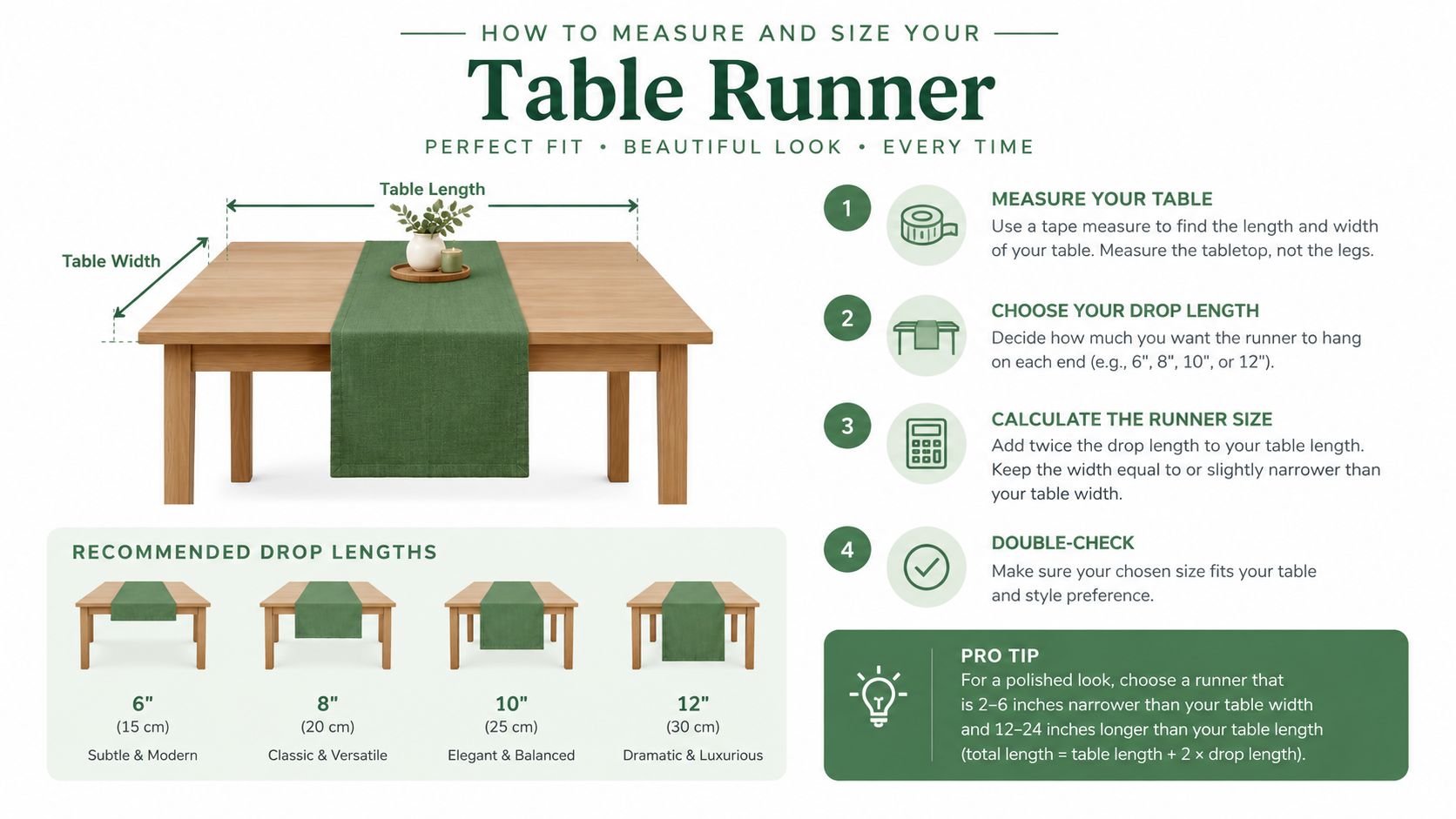
Measure the furniture, not the pattern envelope. Record the full tabletop length and width, then decide whether you want the runner to stop at the edges or drop over them. For a traditional drape, use this formula:
Finished runner length = table length + desired overhang on the left + desired overhang on the right
A runner intended to span the full table usually works with a 6 to 12 inch drop at each end, while a clean, modern setting may call for a shorter finish. Spoonflower's table runner guidance also recommends sizing the runner to roughly one-third of the table width.
Adjusting for shape and table use
Rectangular and oval tables are straightforward because the runner follows the long axis. A round table needs more visual judgment. Measure across the diameter, decide whether the runner will cross the center or sit as a short decorative panel, and check that the ends won't interfere with chairs.
Square tables offer two useful arrangements. Run one runner from edge to edge for a linear centerpiece, or place two runners in a cross formation when the table is used for multiple place settings. In either case, lay out plates, serving dishes, and chairs before cutting.
Use these checks before you commit to fabric:
- Place settings: Keep enough exposed table surface for plates and cutlery to sit comfortably beside the runner.
- Centerpieces: A broad vase or layered arrangement may need a slightly wider runner for visual support.
- Tablecloth layering: A runner over a cloth should usually be shorter or narrower so the two layers don't compete.
- Chair clearance: Pin or tape the proposed overhang in place and sit down at the table. A beautiful drop that catches a knee isn't practical.
For seasonal inspiration, pair your measurements with the layouts in these fall table runner patterns, then compare each pattern's finished size with your own tabletop.
Don't forget construction allowance. Quilting, binding, pressing, and laundering can draw the finished piece inward, particularly when the batting has more loft or the quilting is dense. Make a paper or muslin template at the intended finished size, place it on the table, and adjust before cutting the good fabric.
Choosing the Best Fabrics and Batting for Drape
Fabric and batting determine whether a runner feels refined or cumbersome. For everyday use, I prefer a tightly woven plain weave because it supports accurate cutting, resists excessive fraying, and tolerates repeated laundering better than a loose weave. Kona Cotton Solids have a dependable, buttery hand for precise piecing, while Ruby Star Society prints add color and surface interest without requiring a complicated block design.
Linen and linen-cotton blends bring a softer, more relaxed drape. They suit rustic entertaining and informal tables, but they can shift under the presser foot and show pressing inconsistencies more readily. Cotton is usually the easier choice for a first runner or a gift that needs predictable care.
Batting and Fabric Selection Matrix
| Material Type | Best For | Drape & Shrinkage Notes |
|---|---|---|
| Low-loft cotton batting | Flat everyday runners | Keeps seams and edges relatively slim. Cotton batting may shrink about 3–5% after washing, so account for that before quilting. Batting guidance from Home to Sight |
| Low-loft cotton-blend batting | Texture with moderate stability | Adds quilting definition without the heavy puff of high-loft batting. Test the finished sandwich because blend content affects hand and movement. |
| Fusible batting | Fast gifts and simplified assembly | Useful when you want to reduce pinning, but the adhesive can make the piece feel stiffer and may not suit a fluid, drapey runner. |
| Interfacing without batting | Minimalist, crisp runners | Produces a stable, flatter surface, though it won't provide the quilted texture or soft hand of batting. |
| Cotton or linen-cotton fabric | Frequent washing | Dense weaves and reinforced hems generally tolerate service better than loose weaves or narrow overlocked edges. |
Low loft is the safest technical choice for most table runners. High loft can create attractive stitch definition, but it also increases bulk at seams and can make the runner look inflated instead of architectural. A flatter batting, or even interfacing for an unquilted design, lets the textile sit cleanly against the dining surface.
I tested a cotton batting beside a higher-loft option on a runner with intersecting seams. The higher loft made the quilting more prominent, but the center became noticeably thicker where several seam allowances met. The low-loft version pressed flatter and folded more neatly for storage.
My shop-floor rule: Choose loft for the table, not for the quilt label. A runner needs enough body to hold its shape, but it shouldn't behave like a miniature comforter.
Cut outer pieces slightly oversized when using cotton or cotton-blend batting, especially if exact finished dimensions matter. Prewashing the fabric can reduce surprises, but it won't eliminate every change created by quilting and laundering. For everyday runners, dense fabric, low loft, and careful pressing outperform dramatic puff.
If you're comparing fiber options and construction approaches, use this guide to choose batting for quilts before ordering the middle layer.
Quick Patterns and Ready-to-Sew Kit Options
A free weekend can disappear before the first seam is sewn. Fabric selection, cutting, pressing, and supply gathering often take longer than expected, especially when the runner must match a specific table length. Coordinated kits reduce that preparation by turning the project into an assembly task, which suits makers who want handmade results without spending hours planning every component.
Precut fabric rolls, strip sets, half-square triangle toppers, and pixel quilt kits each support a different construction style. Beginners get consistent pieces and clearer instructions. Experienced quilters can spend their time checking seam alignment, pressing direction, and quilting layout rather than cutting dozens of parts. Precut pieces also reduce waste, although they leave less flexibility if you need to adjust the finished size.
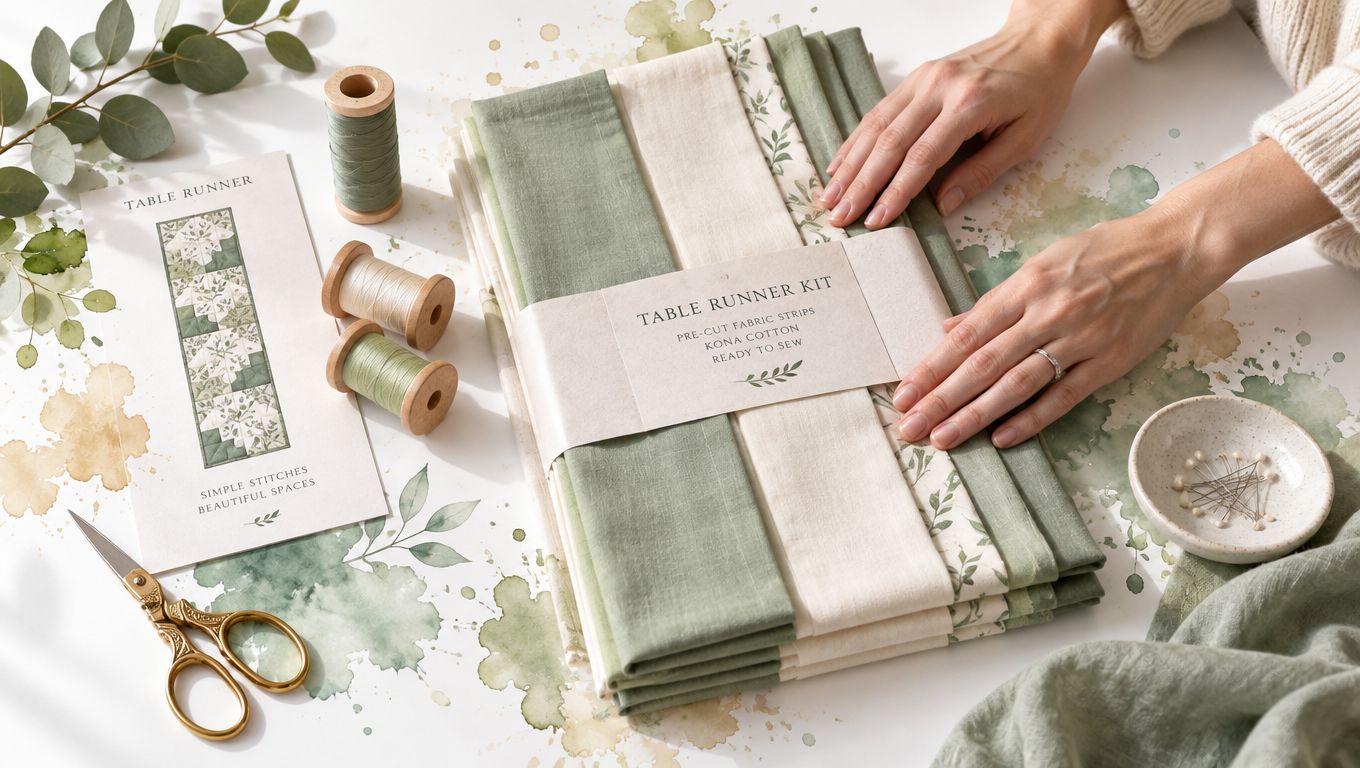
Read the materials list before ordering. Some kits provide only the pieced top, while others include backing, binding, batting, thread, and pattern instructions. Confirming those details prevents a time-saving kit from creating a second shopping trip. If the fabric is not prewashed, account for possible shrinkage before deciding whether the stated finished dimensions will fit your table.
Matching the kit to the maker
- Beginners: Choose a simple patchwork or strip-pieced design with labeled cuts and uncomplicated nesting seams. A fat quarter is a quarter-yard cut, generally useful for small blocks, accents, or coordinated sections.
- Busy seasonal decorators: Select a kit with a defined holiday palette, such as the Elf Feet Christmas Table Runner Precut Quilt Kit, so color selection is already contained. Seasonal prints save planning time but may see less use after the holiday.
- Modern aesthetic makers: Look for graphic solids, pixel layouts, and high-contrast bundles. Ruby Star Society prints paired with Kona Cotton Solids can produce a contemporary surface without dense ornament.
- Gift-makers: Favor a recognizable motif and a clear backing plan. A finished runner is easy to wrap and offers room for personal quilting without requiring a custom fabric search.
- Collegiate fans: A team-colored runner can show school spirit without the scale of a tailgate quilt. Dense fabric and secure quilting suit textiles that receive frequent handling.
Search-interest commentary published for 2026 reports the query “table runner set” reaching a peak interest value of 8 in April 2026, compared with 1 in April 2025. It also describes interest in personalization, visible stitching, layered decor, and coordinated craftsmanship. The table runner trend commentary supports the practical appeal of bundled sets, although search interest does not predict sales for an individual maker.
A coordinated bundle preserves the handmade character while removing the preparation work that most often stalls a project.
For a beginner-friendly starting point, compare construction methods in these pre-cut quilt kits for beginners. A small seasonal set could also use the Patriotic Gnomes Quilted Table Runner Precut Quilt Kit, provided its finished dimensions and included materials match the project.
Selecting Wideback Fabrics and Finishing Techniques
A runner can look flat on the cutting table and still shift, ridge, or ripple after quilting. The backing plays a major role in that result. A center seam adds bulk and may create a raised line, particularly when it crosses a heavily pieced top. Wideback cotton removes that interruption, giving the quilt sandwich a more consistent surface and a cleaner drape over the table.
Lay the backing beneath the finished top before trimming. Check the weave, color, and print scale together. P&B Textiles and Marcus Fabrics are practical names to consider when their fabric suits the project. A busy reverse can be attractive, but a quieter print makes pressing, quilting, and final inspection easier. It also keeps directional piecing on the top from competing with the back.
Building a durable finish
Square the quilted piece before binding. Use a large ruler and compare both diagonals where possible. If the edges are out of square, the binding can draw one side inward and leave ripples that pressing will not fully correct.
Use this finishing sequence:
- Square the sandwich: Trim after quilting, once draw-in is visible. This gives you accurate finished edges instead of relying on pre-quilting measurements.
- Stitch the hem or binding securely: For an unbound runner, a stitched hem around 1 to 1.5 cm suits repeated laundering. Independent table-linen care guidance recommends reinforced hems and dense plain weaves for longer service life.
- Use an even stitch length: Uneven stitches can form weak points and visible waviness. A walking foot helps the layers feed at a consistent rate.
- Reduce seam bulk: Press nested seams open or toward opposing sides according to the block design. Grade bulky intersections where the construction permits.
- Finish the corners deliberately: Mitered corners keep the edge neat. A narrow double-fold hem works well for a runner with less quilting.
A bound runner generally handles repeated use well because the binding encloses the raw edge. Cut binding on the straight grain for a structured rectangular runner. Use a bias method when the edge design needs more flexibility. Press the binding before attaching it, and keep it relaxed around the perimeter rather than stretching it.
When a wideback makes sense
Choose wideback fabric when the top has strong directional piecing or the reverse should remain visually quiet. Fewer seams mean less matching, faster preparation, and fewer opportunities for puckering. Review quilt backing fabric options before cutting, especially when the runner has a fixed footprint.
Plan the batting at the same stage. The Choice Supreme Batting table-runner size can help match the middle layer to the project without purchasing more than needed. Low-loft batting usually supports a flatter drape, while dense quilting can make even a flexible sandwich feel stiffer.
Wash the completed runner according to the fiber and batting requirements. Harsh heat can stress fibers, fade color, and increase shrinkage. A stable backing, low-loft batting, even quilting, and restrained drying temperature give the finished runner a better chance of remaining flat.
Frequently Asked Questions About Handmade Runners
How should you wash and dry a handmade table runner?
Wash a handmade runner on a cold or gentle cycle when the fabric and batting allow it, then dry it at low temperature or air-dry it flat. Dense cotton, linen, or linen-cotton fabric with reinforced hems generally handles laundering well, while harsh heat can increase fading, fiber stress, and shrinkage.
Care depends on the entire sandwich, not just the top fabric. Check the batting label, avoid aggressive agitation, and don't leave the runner damp in a heap. Smooth it while slightly damp, then press from the wrong side with a suitable temperature so the quilting remains defined without flattening the fabric unnecessarily.
Can you layer a handmade runner over a tablecloth?
Yes. Use the tablecloth as the quiet base and choose a runner with a shorter or more controlled drop so the two textiles remain visually distinct. A textured runner over linen or gauze can anchor a seasonal centerpiece, but bulky layers may shift or make place settings feel crowded.
Before sewing, test both layers on the actual table. Check whether the runner slides when dishes move, whether the centerpiece overwhelms the width, and whether the combined fabric thickness affects the overhang. A flatter low-loft sandwich is usually easier to layer than a puffy one.
Is fusible batting a useful shortcut for quick gifts?
Fusible batting can be a sensible shortcut for a quick gift because it holds the layers together during piecing and reduces pinning. It isn't always the right choice for a soft, fluid runner, since adhesive can create a firmer hand. Test a small sandwich first, then compare drape, pressing response, and stitch definition.
Use fusible batting when speed and stability matter more than relaxed movement. It works particularly well for a simple seasonal design with straight-line quilting, but a low-loft cotton batting may produce a more natural table drape for an heirloom-style gift. Follow the manufacturer's fusing temperature and pressing instructions.
For a more traditional quilted finish, review this guide to quilted table runner construction and compare its layering choices with your intended use.
QuiltKit offers ready-to-sew table runner kits, coordinated precuts, Kona Cotton Solids, Ruby Star Society fabrics, Hobbs and Pellon batting, and wideback cottons for clean finishing. Visit quiltkit.com to choose a project that matches your available time, and join the Email Sign-up Savings list if you're planning your next handmade table setting.