


How Many Fat Quarters for a Quilt: Sizing Guide
You're standing at the cutting table with a bundle in your hands, and the question hits all at once. How many fat quarters for a quilt is enough. Is 12 a baby quilt, a throw, or nowhere close?
That confusion is normal because fat quarters don't behave exactly like plain yardage. They're a fabric unit, a cutting shape, and a planning shortcut all at once. Once you know how to convert them, and once you factor in seam allowance, block size, and layout extras, the math gets much calmer.
Why Quilters Count Fat Quarters Before They Cut
A lot of quilt planning goes sideways before the rotary cutter ever touches fabric. The bundle looks generous on the shelf, but once you start sorting pieces into blocks, borders, and background, it's easy to realize you were counting prints instead of usable fabric.
That's why quilters count fat quarters first. The count tells you whether your fabric matches the kind of quilt you want to make, not just whether the stack looks full. If you're sewing a simple patchwork top, the count gives you a solid starting point. If you're sewing a pattern with tighter geometry, coordinated bundles, or extra sashing, the count helps you spot trouble before you begin.
Practical rule: Fabric planning works better when you start with the cut size in your hands, then translate it into the finished quilt on the bed.
Beginners often get tripped up by three things:
- Bundle size confusion: A fat quarter bundle doesn't always mean the same number of pieces.
- Shape confusion: A fat quarter isn't the same shape as a regular quarter yard.
- Pattern confusion: A pattern may use small patchwork, long strips, or borders, and each one cuts differently.
If you're still getting comfortable with quilt math, it helps to pair this article with a simple patchwork layout such as these basic patchwork quilt designs. Straightforward block layouts make the conversion much easier to see.
Here's the part that settles nerves. You don't need advanced math. You need one clean conversion, a realistic size chart, and a habit of checking whether your pattern wastes fabric in long strips or directional cuts. Once you do that, your bundle starts making sense.
What a Fat Quarter Actually Is
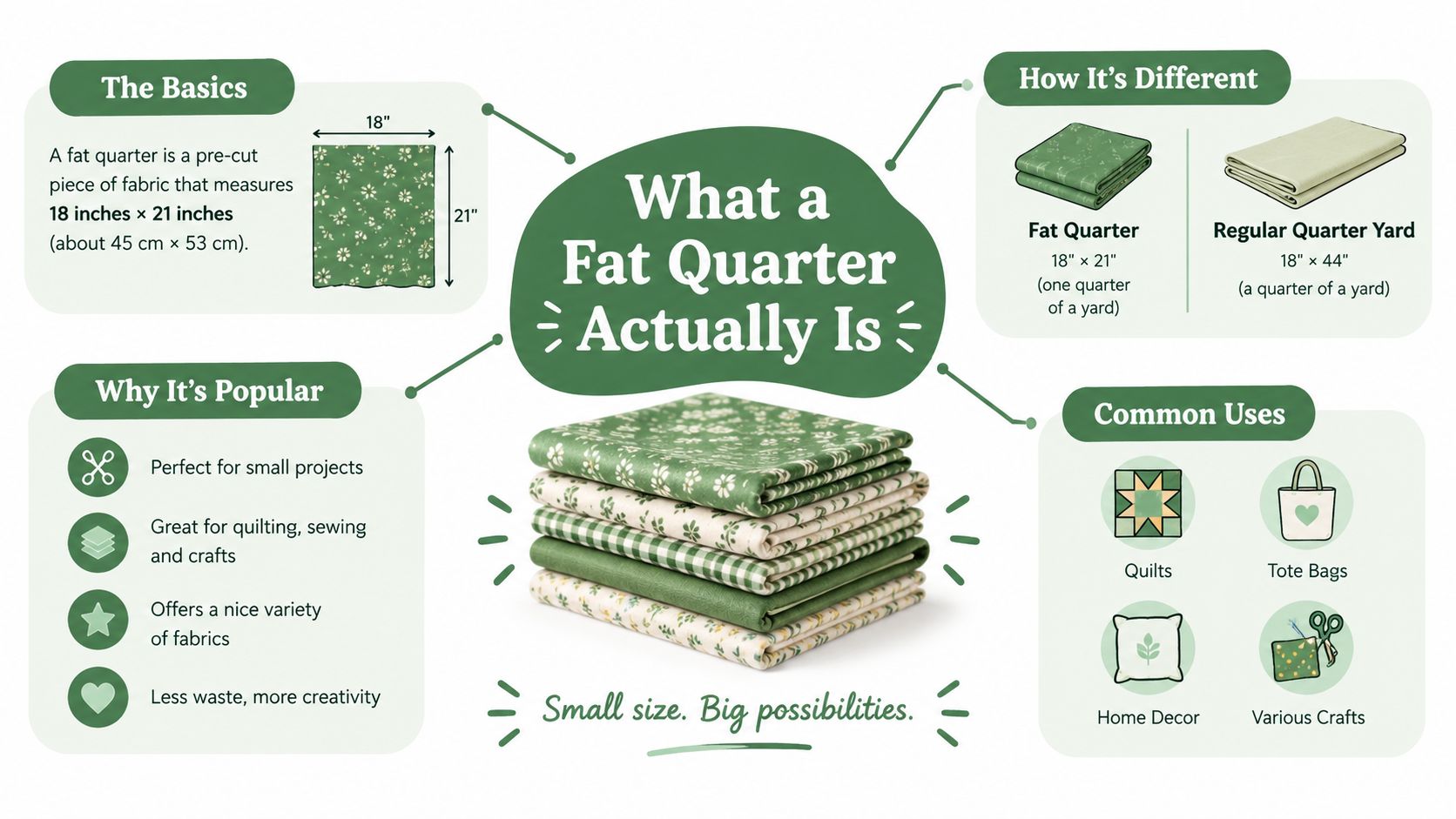
Suppose a pattern asks for several yards of fabric, but your favorite prints are sold in a bundle of smaller cuts. To compare those options, start with the shape and area of one fat quarter.
A fat quarter is one quarter yard of fabric cut into a wide rectangle, usually about 18 by 21 inches or 18 by 22 inches. Four fat quarters cover the same area as one full yard, so quilters can convert yardage into a starting fat quarter count (Fat Quarter Shop pre-cut fabric guide).
Standard quilting cotton is often about 44 inches wide. The fabric is first cut into a half-yard section, then that section is cut across the width. The result is wider and shorter than a regular quarter-yard cut. Missouri Star gives the common example of an 18 by 22 inch fat quarter made from fabric about 44 inches wide (Missouri Star fat quarter size guide).
Why the shape matters
A regular quarter yard forms a long, narrow strip. A fat quarter is shorter and wider, so it suits medium-size squares, rectangles, and many quilt-block pieces. The area is equivalent, but the cutting options are different.
For example, one quilting source shows that a fat quarter can yield 16 squares at 4.5 inches, while a regular quarter yard can yield 18 squares of that size. The difference shows why area alone cannot predict your final count. The dimensions of each piece and the arrangement on the fabric matter too (Diary of a Quilter on fat quarter use).
The basic conversion you'll use again and again
At the cutting table, begin with this simple area conversion:
- 4 fat quarters = 1 yard
- 8 fat quarters = 2 yards
- 16 fat quarters = 4 yards
Mrs. Quilty applies the same calculation to pattern planning. A pattern calling for 2 yards corresponds to about 8 fat quarters, while 4 yards corresponds to about 16 fat quarters, provided the pieces can be cut efficiently from separate fat quarters (Mrs. Quilty fat quarter yardage conversion).
Treat those results as a planning baseline, not a cutting guarantee. Long borders, continuous strip sets, directional prints, and generous seam allowances can require regular yardage instead. For bundle comparisons, this overview of fat quarter bundles connects the cut size with practical project planning.
Fat Quarter Counts by Quilt Size
What is a good starting count by quilt size
A practical starting point is fewer than 10 fat quarters for small projects, around a dozen for many throws, and dozens of fat quarters for bed quilts. Published quilting guides cluster around 6 to 9 for baby quilts, 12 to 16 for throw or lap quilts, 20 or more for twin sizes, and roughly 30 to 42 for queen-size quilts, with king quilts often needing even more (Stitchin' Heaven fat quarter guide).
That's the quick answer. The fuller answer is that two quilts with the same finished size can use very different counts depending on block geometry and how much background, sashing, or border fabric the pattern requires.
Fat Quarter Counts by Finished Quilt Size
| Quilt Size | Finished Dimensions (in) | Fat Quarters Needed | Approx. Yardage |
|---|---|---|---|
| Mini or table runner | Small project category | 3 to 6 (Fat Quarter Shop bundle guide) | About 3/4 to 1 1/2 yards |
| Baby or crib | Baby quilt category | 6 to 12, with one chart estimating about 9 for a crib quilt (Fat Quarter Shop bundle guide) | About 1 1/2 to 3 yards |
| Lap or throw | Lap or throw category | 12 to 18, with one chart estimating about 12 for a throw quilt (Fat Quarter Shop bundle guide) | About 3 to 4 1/2 yards |
| Twin | Twin quilt category | 18 to 24+, with one chart estimating about 24 for a twin quilt (Fat Quarter Shop bundle guide) | About 4 1/2 to 6+ yards |
| Queen | Queen quilt category | 32 to 42, with another chart estimating about 35 for a queen quilt (Fat Quarter Shop bundle guide) | About 8 to 10 1/2 yards |
| King | King quilt category | 48 to 56, with one size chart estimating about 56 for a king quilt (Fat Quarter Shop bundle guide) | About 12 to 14 yards |
I like this chart because it gives you a starting lane instead of pretending there's one magic answer. When I'm sorting a Ruby Star Society bundle at the studio table, I don't ask whether the stack looks big enough. I ask whether the count fits the quilt category before I ever think about color placement.
Why the ranges widen on bigger quilts
As quilts get larger, the estimate spreads out for practical reasons:
- More pieces: Complex block layouts can consume more fabric than open layouts.
- More support fabric: Sashing, cornerstones, and borders can steadily eat yardage.
- More waste points: Directional prints and repeated trimming matter more on bigger tops.
For a typical throw quilt, one guide says you generally need about 12 to 16 fat quarters, while another pre-cut guide lists a throw quilt at about 12 fat quarters (Missouri Star quilting fat quarter guide). That small gap is exactly what beginners notice in real life. The quilt size may be the same, but the pattern can change the count.
If you're comparing bundles for a project kit, fabric bundles for quilting is a useful next stop because it helps you match bundle count to project type instead of shopping by color alone.
A bed quilt can need dozens of fat quarters even when the blocks themselves don't look complicated.
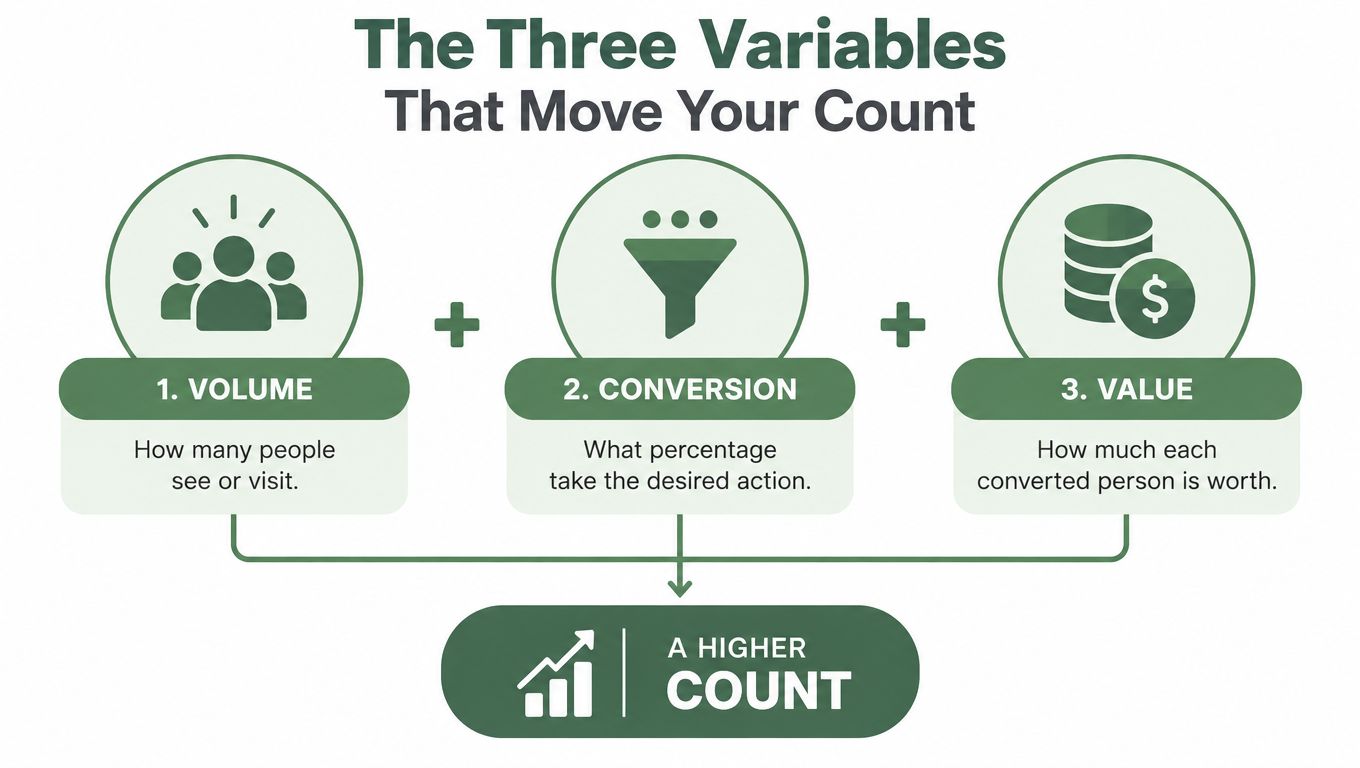
The Three Variables That Move Your Count
The size chart gives you a starting count. Your pattern decides whether that count stays put or climbs.
Finished block size
Large blocks usually waste less fabric than tiny pieced blocks. If a pattern uses bold 12-inch patchwork blocks, each fat quarter can often produce several units with less trimming. If the design breaks those same areas into smaller subunits, you start losing more fabric to seam allowances and cleanup cuts.
This is why two throw quilts can land on different counts. One throw may sit near the lower end of the common range, while another needs more pieces because the cutting map is denser.
Seam allowance
A seam allowance is the strip of fabric taken up when two pieces are sewn together. In quilting, the standard is often 1/4 inch, and one published size chart specifically bases its estimates on a 1/4-inch seam plus a 2-inch selvage allowance (Fat Quarter Shop bundle chart details).
If your seam runs a little wide, small pieces shrink fast. If your seam runs a little narrow, units can oversize and force extra trimming. Either way, precision matters more as the pieces get smaller.
Here's a quick visual walk-through before you calculate your own pattern:
Layout density
Layout density is the amount of fabric your quilt uses outside the main block faces. Think sashing, borders, setting triangles, and any print matching that interrupts efficient cutting.
A sparse grid of blocks on background fabric behaves differently from a packed patchwork top. Even if both finish at a similar size, the denser one may ask for more cuts from each fat quarter.
Workshop note: Don't trust a size chart blindly if your pattern includes borders or long strip elements. Those features often shift the plan back toward yardage.
A simple way to adjust your estimate is this:
- Start with the size chart range for your quilt category.
- Check the pattern pieces and ask whether they're mostly blocks, mostly strips, or a mix.
- Move upward in the range if the pattern includes small piecing, directional prints, borders, or extra sashing.
I use this method when I'm checking whether a bundle will behave well before cutting. If you want a tool-focused walkthrough, how to calculate fabric yardage gives another angle on the same planning step.
Substituting Fat Quarters for Yardage and Other Precuts
A pattern may call for yardage while your shelf holds fat quarters. The substitution becomes manageable once you compare the usable fabric area, the shape of the required pieces, and the layout of the quilt. A fat quarter can replace yardage for block parts, but it cannot always replace one uninterrupted strip.
When fat quarters work well
Fat quarters are a practical choice when the pattern uses:
- Medium block pieces: Their rectangular shape suits patchwork units larger than tiny scraps.
- Variety of prints: Sampler and scrappy quilts need several fabrics without requiring a full yard of each.
- Coordinated bundles: A bundle provides planned color movement while keeping each fabric in a manageable cut.
A bundle can contain anywhere from 6 to 42 pieces. The term describes the fabric cut, not a guaranteed number of fat quarters. Check the actual piece count before comparing a bundle with a pattern requirement.
To convert a yardage requirement, first determine how many fat quarters the pattern's pieces will need. A fat quarter usually offers roughly the same area as a quarter yard, but its shape changes how efficiently you can place the templates. For example, a pattern needing wide, continuous strips may waste more fabric from fat quarters than one using squares and rectangles.
When yardage is a better fit
Choose yardage for borders, binding cut from one fabric, repeated strip sets, and directional layouts that require long, continuous pieces. Yardage also reduces joins when the pattern depends on a consistent grain or a clearly repeated print.
Kona Cotton solids illustrate this use well. Their stable hand supports clean cutting and predictable seam behavior for precise patchwork.
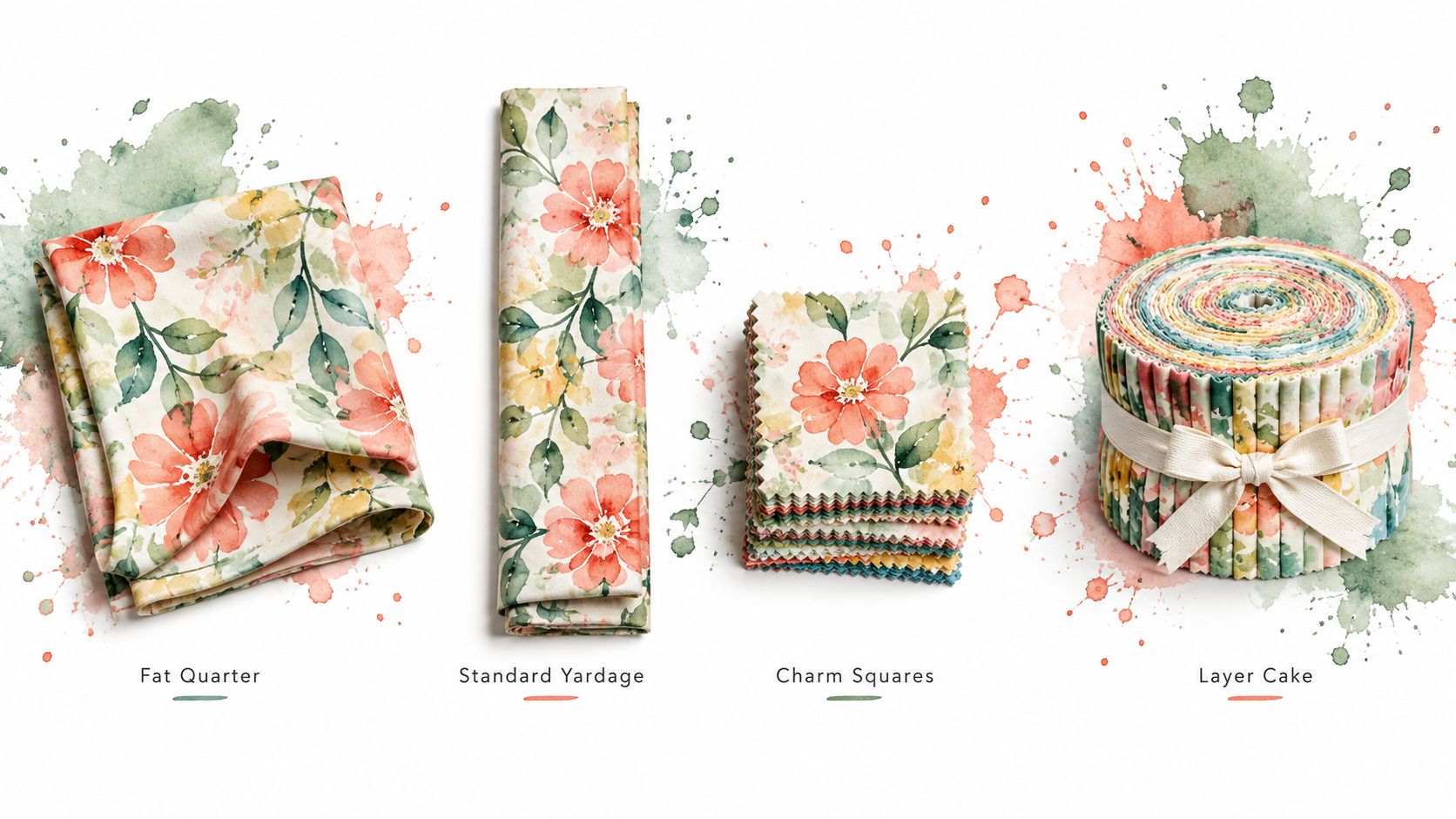
How charm packs and layer cakes compare
Charm packs and layer cakes save cutting time, but their fixed square sizes limit your options.
- Charm packs: Fit patterns built around small squares.
- Layer cakes: Suit larger blocks and quick cuts for half-square triangle units.
- Fat quarters: Offer more flexibility when a design mixes squares, rectangles, strips, and triangles.
If you prefer a coordinated project rather than doing the conversion yourself, ready-to-sew options such as this quilt kit product listing provide the fabric selection and pattern format together. Check the included cut sizes and finished quilt measurements before buying, then compare them with your pattern's cutting plan.
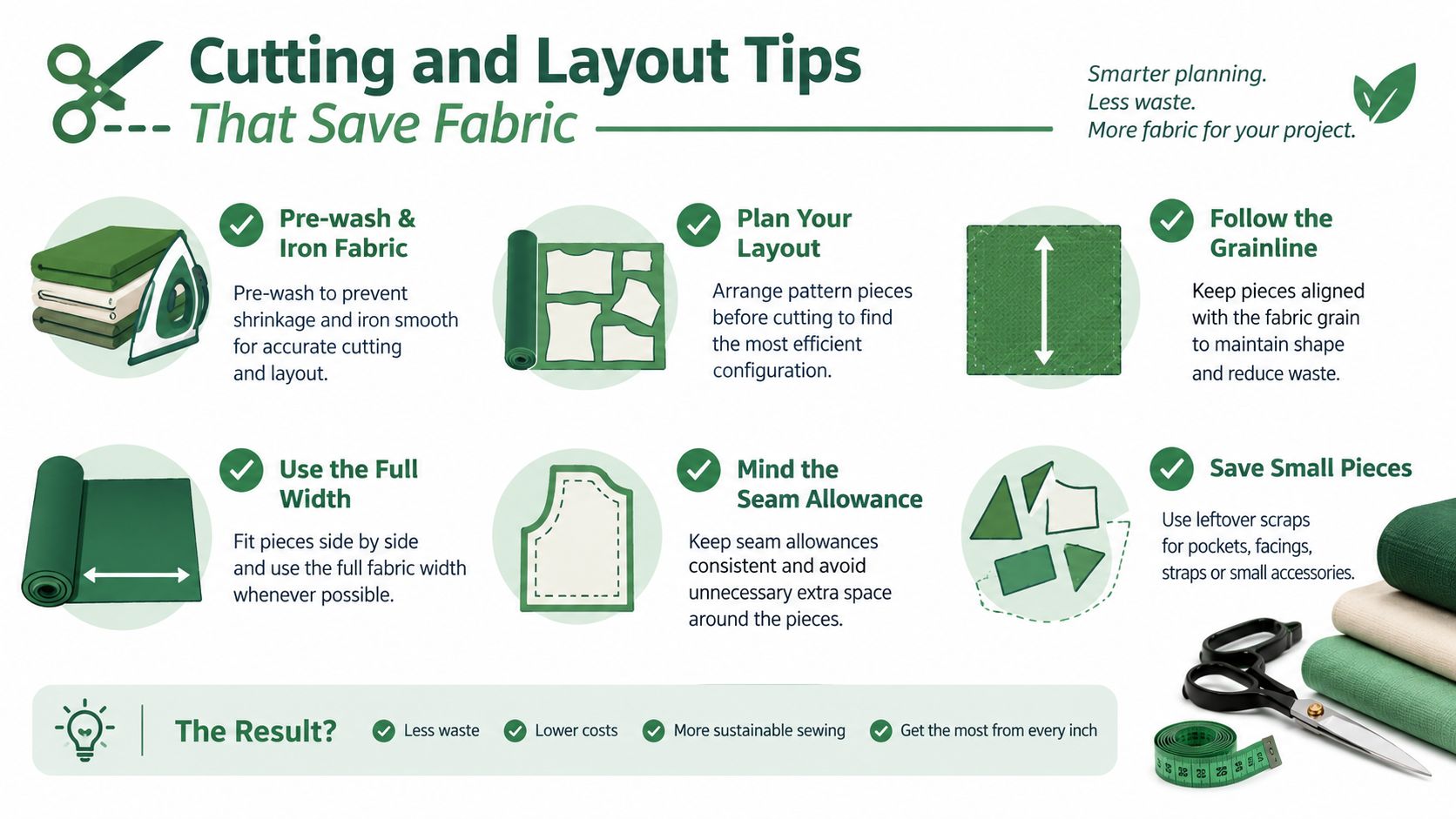
Cutting and Layout Tips That Save Fabric
Most fat quarter shortages come from the cutting plan, not from a bad estimate. A careful layout will often rescue a bundle that feels borderline.
What to check before the first cut
Different guides don't always assume the exact same fat quarter dimensions. Some use 18 x 22 inches, some use 18 x 21 inches, and wide-width fabrics can change the usable cut size, which means calculator results can shift depending on fabric width and trimming assumptions (National Quilters Circle on fat quarter sizing differences).
That's why I always unfold the fabric and measure the actual usable rectangle before cutting. On my own machine and longarm prep, I stick to a careful 1/4-inch seam allowance and mark any print direction before I subcut. It saves far more fabric than trying to “eyeball” a stack later.
Habits that reduce waste
Keep these habits close to the mat:
- Trim with a plan: Cut the largest required shapes first, then fit smaller units into the leftover spaces.
- Watch the selvage edge: Some charts allow for trimming loss, and that missing edge can matter.
- Mark directional prints: Florals, text prints, and collegiate motifs often need a one-way layout.
- Label cut stacks: Note the block name or placement as soon as you cut each group.
If you use rulers heavily, accurate measuring tools make a big difference. A set of quilting templates and rulers helps keep repeated cuts consistent, especially on smaller units where drift adds up.
Folded fabric can hide a slight skew. If the weave isn't square when you begin, the whole cutting plan gets harder.
A short checklist for your cutting mat
- Confirm the actual fat quarter size
- Check whether the pattern needs strips or only blocks
- Reserve directional prints for cuts that keep the motif upright
- Set aside extra fabric for borders, sashing, or binding if the pattern calls for them
- Label every stack before sewing starts
Pellon and Hobbs both make batting options quilters often pair with finished tops, and if you're planning the whole project from top through quilting, it helps to think about backing and batting before your fabric cuts are locked in.
Common Fat Quarter Questions Answered
Is a fat quarter bundle enough for a queen quilt
A queen quilt may use a fat quarter bundle, but the pattern determines whether it is enough. Published guides place queen quilts around 32 to 42 fat quarters, with one chart estimating about 35 for a queen size (Stitchin' Heaven fat quarter benchmarks). Treat that range as a starting point, then check the block count, borders, seam allowances, and how efficiently the pieces fit on each cut.
Should I buy extra for safety
Buy extra fabric when the pattern includes borders, directional prints, or dense piecing. A simple block layout may use a fat quarter efficiently, while angled or tightly packed cuts leave more waste. If the chart assumes one layout, adjust the count upward when your pattern uses a different arrangement.
What do I do with leftovers
Sort leftover pieces by color family. They work well for scrappy binding, pieced backings, mug rugs, small pouches, and sampler blocks.
Can I use fat quarters for quilt backing
Fat quarters suit the quilt top better than a single-piece backing. A backing needs wider and longer fabric, so many quilters choose wideback fabric or join larger panels rather than sewing dozens of small rectangles.
QuiltKit offers ready-to-sew kits, quilting supplies, batting, and widebacks for quilters who prefer to simplify project planning. The site also lets you compare fabric formats and view its email sign-up savings at quiltkit.com.