


White Cotton Fabric Guide for Quilters
You're at the cutting table with a stack of prints, a ruler, and one apparently simple decision: which white should anchor the quilt? The bolt may look clean and uniform, but white cotton fabric can differ in surface, warmth, opacity, weave, finish, and washing behavior. Those differences show up quickly when you match seams, press blocks, or launder the finished quilt.
The most reliable choice is the fabric whose fiber content, weave, finish, and care history suit the project. A smooth, tightly woven quilting cotton can support precise piecing, while a softer or loosely woven cloth may shift, fray, or shrink differently. The practical details matter more than a vague label such as “premium.”
What White Cotton Fabric Actually Is
White fabric isn't always white cotton fabric in the technical sense. Natural, untreated cotton often has a creamy or yellowish cast because the fiber contains naturally occurring waxes, pectins, lignin, and yellowish pigments. A controlled bleaching stage removes those impurities and creates a more uniformly white, hydrophilic surface.
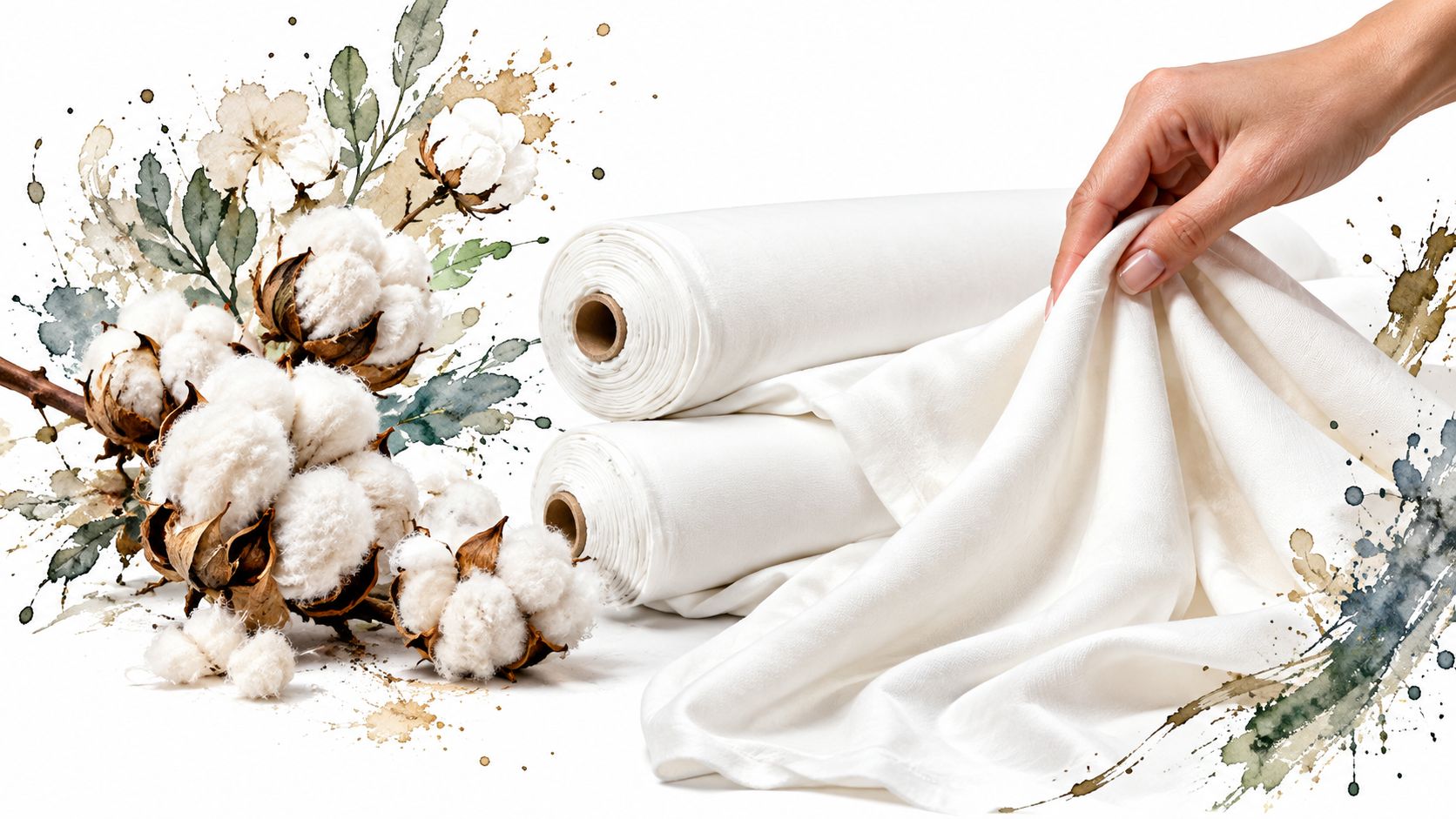
The distinction affects how the cloth handles. Bleached cotton is more receptive to moisture, dye, printing, and later finishing, while unbleached cotton retains more of its natural color and may feel different under the needle. For a quilt, that can influence how readily the fabric accepts starch, how evenly it presses, and whether it blends with bright white prints or warmer neutrals.
How bleaching changed cotton
The earliest documented approach was grassing, also called crofting. Cotton was soaked, spread over grass, exposed to sunlight, and periodically re-wetted. Comparable sun-bleaching practices existed in ancient Egypt around 3000 BCE, as well as in India and China, according to the historical account in this textile bleaching study.
Industrial bleaching came much later. Carl Wilhelm Scheele discovered chlorine in 1774, Claude Berthollet proposed chlorine for textile bleaching in 1785, and Charles Tennant patented calcium hypochlorite, or bleaching powder, in 1799. During the twentieth century, hydrogen peroxide became the principal alternative to chlorine compounds, with wider adoption beginning in the 1920s because it generally caused less fiber damage and produced fewer problematic by-products.
For quiltmakers, the useful takeaway is simple: white is a finished condition, not proof that the cotton was untreated. You can compare the visual warmth and hand of a natural cloth with a bleached solid by examining the fabric in daylight, then checking how it responds to pressing. For more background on sourcing and fabric formats, see bolts of cotton fabric.
Fiber Types, Thread Count, and Weight
A fabric bolt tells you more through its construction than through its color name. Fiber length, yarn quality, thread count, weave tightness, and weight determine whether white cotton fabric feels stable for cutting or slippery and vulnerable to distortion.
Longer cotton fibers can be spun into smoother, more consistent yarns. A tighter weave generally produces a firmer surface with less fraying, better opacity, and cleaner edges for rotary cutting. Thread count can help you compare fabrics, but it isn't a complete quality score. A high thread count matters only alongside sound yarns, balanced construction, and a finish that doesn't make the cloth unnaturally stiff.
Match the cloth to the job
Lightweight cotton can suit delicate appliqué, summer garments, or a low-bulk quilt top. Standard quilting cotton usually offers a useful middle ground, with enough body for accurate seam allowances and enough softness to fold without fighting the iron. Heavyweight cotton duck has more structure and durability, but it can create bulky seams and resist the supple drape many quilters want.
Use the fabric's behavior as your test:
- Tight weave: Look for a stable grain, minimal fraying, and edges that remain fairly clean after cutting.
- Opacity: Hold the cloth near a window or light source. A more opaque white can hide batting shadows and provide a stronger background for appliqué.
- Pressing response: A suitable quilting cotton should flatten under steam or a moderate iron without developing a hard, papery hand.
- Surface texture: Smooth cloth supports sharp seam alignment, while visible slubs or a basket-like texture can add character but complicate tiny pieces.
- Weight and drape: Fold a corner over your hand. Fabric that collapses softly behaves differently from fabric that stands away from the fold.
I pay close attention to whether the cut edge starts shedding fibers as I handle a sample. Minimal fraying saves time during piecing, especially when a block contains many small units. A tighter weave also helps the fabric hold a pressed crease and resist stretching as you nest seams.
For a broader vocabulary of fabric constructions, consult this guide to types of quilting fabric. Product descriptions should supply fiber content and, when available, thread-count or construction information. If they don't, inspect a sample before committing to a large cut.
Top Brands for Quilting Cotton
Brand names can help narrow a search, but they shouldn't replace handling the actual cloth. White cotton fabric varies within and between collections, so compare the base fabric, not just the label printed on the selvage.
Kona Cotton Solids are widely used for modern quilt backgrounds because the cloth has a smooth, substantial hand and what many makers describe as a buttery drape. That combination gives small pieces enough stability for precision piecing without making the finished top feel rigid. Kona is also useful when you want a dependable solid color system for a graphic quilt or a large field of white and near-white shapes.
Ruby Star Society is known for playful prints, distinctive textures, and high-quality cotton bases. Its fabric can be a good partner for a white background when you want the supporting solid to feel contemporary rather than starkly utilitarian. For a modern quilt, compare the warmth of the white against the collection's creams, soft colors, and saturated accents.
Compare by project rather than reputation
A baby quilt, heirloom quilt, and collegiate tailgate quilt don't make identical demands.
| Project | Useful fabric priority | What to inspect |
|---|---|---|
| Baby quilt | Soft hand and easy care | Finish, surface smoothness, and laundering instructions |
| Precision piecing | Stable construction | Grain, fraying, opacity, and pressed seam behavior |
| Heirloom quilt | Durable surface and consistent color | Fiber content, weave, and long-term care requirements |
| Collegiate quilt | Durability and strong contrast | Color coordination, abrasion resistance, and backing compatibility |
I wouldn't choose a fabric only because its white looks bright under shop lighting. Optical brighteners and surrounding colors can change how white appears, and the final result depends on batting, backing, quilting thread, and room light. Put the candidate next to the darkest print in your project and then beside the palest neutral.
Practical rule: Choose the base fabric that behaves predictably under your needle and iron, then use color preference to make the final decision.
Shrinkage and colorfastness still need testing, even when the fabric is from a familiar brand. A well-known name can improve consistency, but it can't tell you how a particular cut will respond to your washing routine. Use this quilting fabric brands comparison as a starting point, then evaluate the specific bolt or bundle.
Prewashing and Care Essentials
Prewashing white cotton fabric before cutting is the safest way to expose its dimensional changes early. Cotton is hygroscopic, with a standard moisture regain near 8.5% under standard atmospheric conditioning, and water interacts with the cellulose structure during washing and drying. That moisture response doesn't automatically predict the final size of every fabric, so treat a sample or the full yardage before drafting pieces.
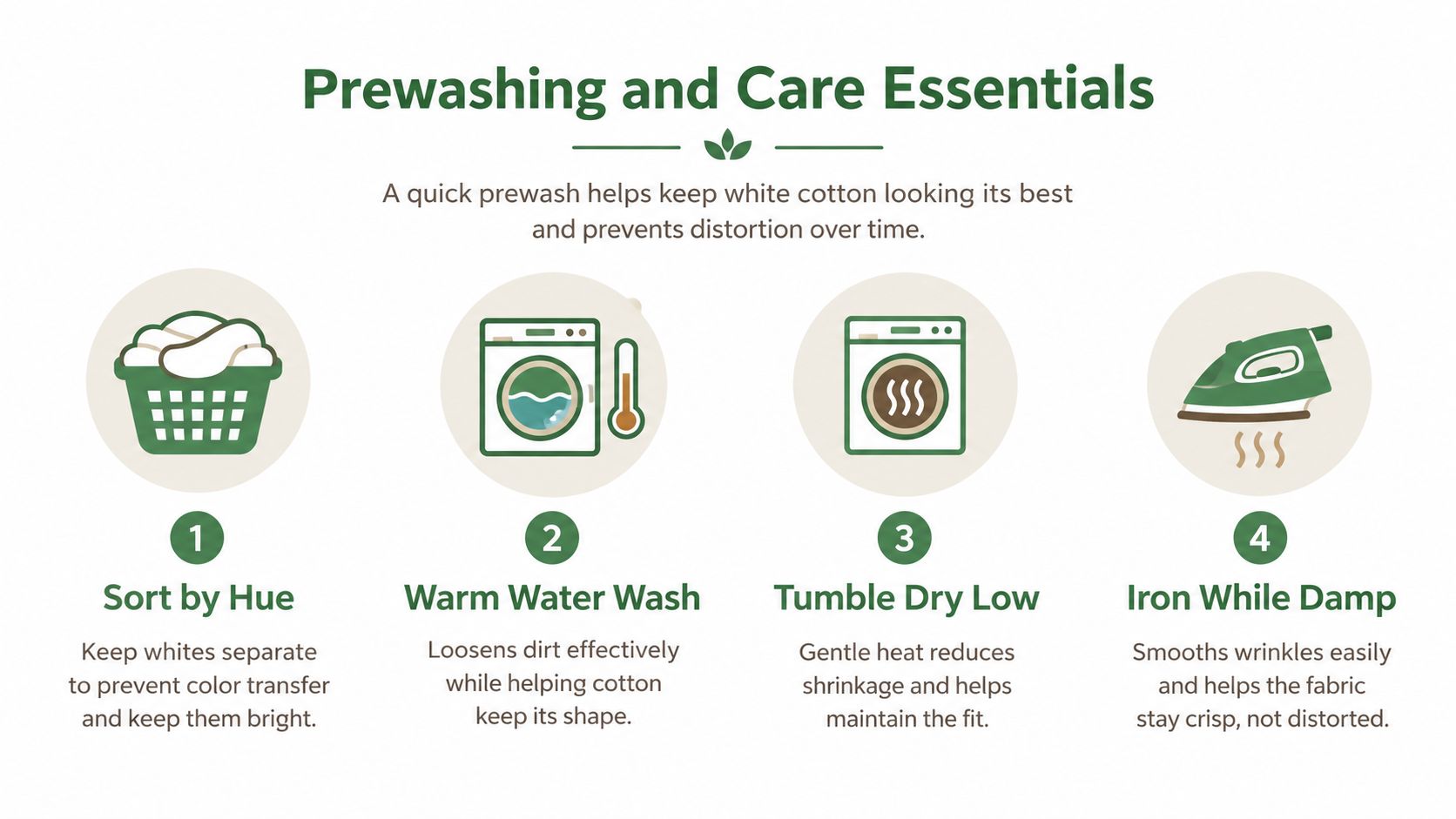
A practical prewash sequence
- Sort by hue. Keep bright whites, warm whites, creams, and colored fabrics separate until you know how they behave together.
- Wash under the intended care conditions. Use a gentle or moderate routine that resembles how you'll launder the finished quilt. Don't choose an unusually harsh cycle just to force maximum shrinkage.
- Dry and press completely. A fully dry fabric gives you a more stable cutting surface. Press out ripples before measuring or squaring the grain.
- Inspect the result. Check for puckering, surface roughness, distortion, or a change in opacity. Those observations matter more than a retailer's generic description.
Woven-fabric experiments found shrinkage in every tested construction, with generally greater change in the warp than the weft direction. Dimensional stability in that work was evaluated under ISO 3759:2011, as summarized in this cotton moisture and shrinkage reference. Prewashing lets the fabric relax before you cut blocks, which reduces the chance that later laundering will shift a carefully aligned quilt top.
Cotton generally becomes stronger when wet, with reported wet-strength increases of approximately 20% compared with dry cotton. That helps during wet preparation, but it doesn't make the fabric immune to stretching, abrasion, or high heat. Launder finished quilts gently, avoid unnecessary chemical exposure, and support the quilt's weight rather than letting it pull against a narrow section.
For a concise care workflow, keep fabric care instructions with your project notes. A white cotton batting product, such as Quilters Dream Select White Cotton Batting or Warm & White Needled Cotton Batting, also deserves a compatibility check with the top, backing, and expected washing method.
The embedded demonstration offers another visual reference for preparing fabric:
Color Matching and Dyeing Techniques
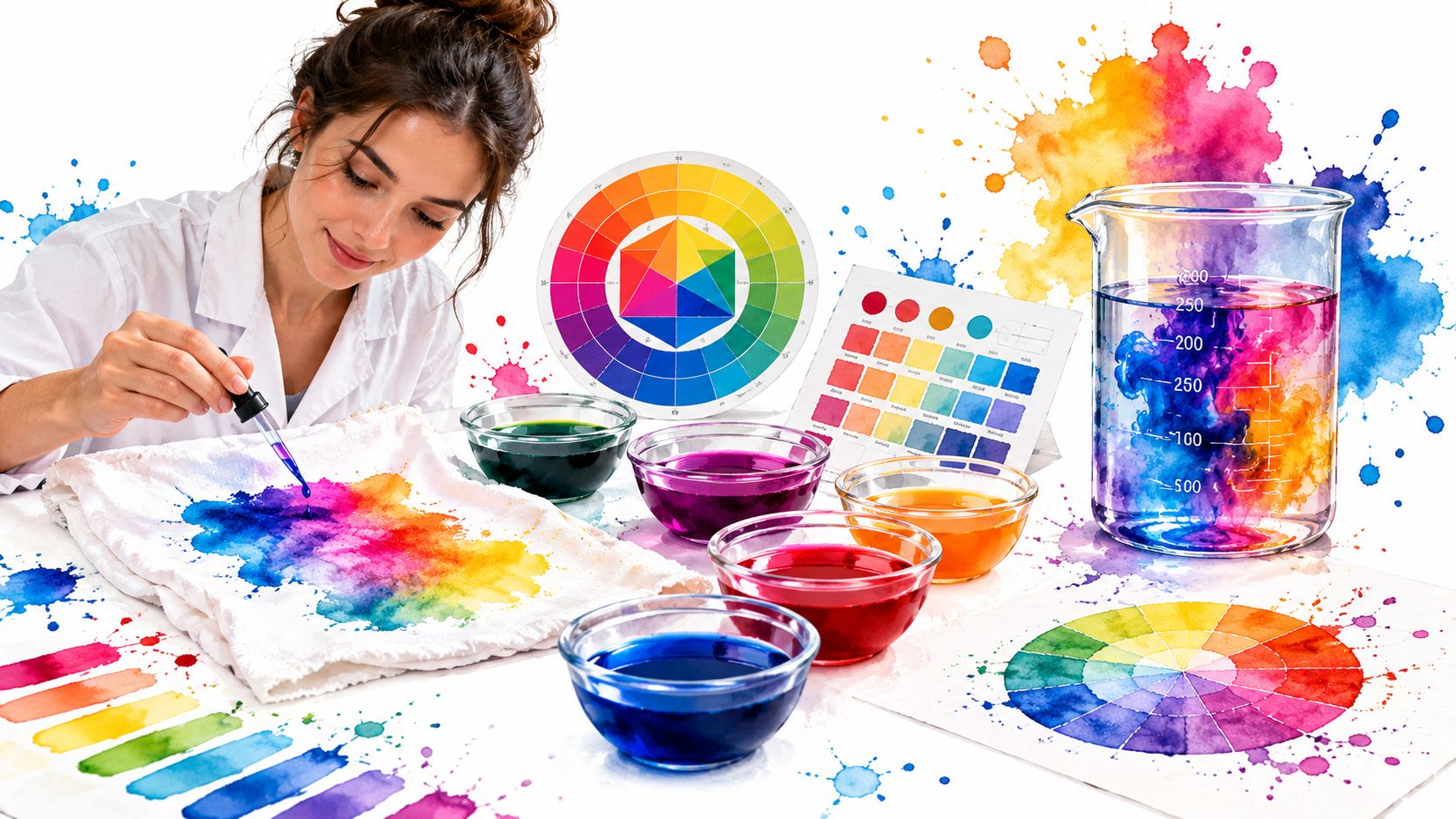
White cotton fabric works as both a finished background and a blank canvas. The strongest color decisions begin by separating fabric color, fabric finish, and light reflection. A cool white can make warm prints look creamier, while a warmer white can soften a high-contrast modern palette.
Build a reliable color test
Before dyeing yardage, cut a small sample from the same fabric. Record the dye product, water condition, temperature, timing, and rinsing method in your project notebook. The point isn't to produce a laboratory-perfect repeat. It's to prevent a small color experiment from becoming an expensive surprise.
A plain weave quilting cotton usually gives a more even visual field than a textured cloth, but the finish still changes how the result appears. Optical brighteners can make white look more luminous or cooler under some lighting, so assess samples in daylight and in the room where the quilt will be used.
For coordinating white with prints, use this sequence:
- Start with the strongest print. Let its background and dominant colors determine whether your white should lean warm, cool, or neutral.
- Compare at a distance. Squinting or stepping back reveals whether the white separates the blocks cleanly or makes them look disconnected.
- Check under quilting light. Thread, batting, and stitch density can alter the apparent contrast.
- Wash a swatch. A prewashed sample shows the relationship after the surface has relaxed, not just as it appears fresh from the bolt.
Bleaching requires restraint. Alkaline hydrogen-peroxide bleaching is commonly used to remove natural waxes, pectins, lignin, and yellow chromophores, while increasing hydrophilicity. Typical industrial processing operates around 80–100 °C and pH 10–11, producing reported CIE whiteness values of about 85–95, according to the technical bleaching research.
Those conditions belong to controlled textile processing, not a home laundry experiment. Excessive temperature, peroxide concentration, or processing time can oxidatively damage cellulose. Reported harsh-condition effects include tensile-strength losses of roughly 10–15% and reductions in degree of polymerization of 5–10%. At home, test any treatment on a scrap, follow the product label, never combine cleaning chemicals, and stop if the fabric surface becomes harsh or weak.
For solid-color matching, browse Kona Cotton Solids and compare samples against your prints rather than trusting a screen image.
Buying Tips for Beginners and Pros
Buy white cotton fabric by construction and intended use, not by the word “white” alone. Beginners usually benefit from a dependable quilting cotton with a stable grain, moderate body, and clear care information. That fabric makes it easier to learn seam allowance control, nesting seams, pressing, and block trimming without adding unnecessary instability.
Before buying yardage, inspect:
- The cut edge: Excessive shedding can signal a looser construction or a finish that won't suit small pieces.
- The surface: Look for an even weave, consistent opacity, and no unexplained streaks or flaws.
- The bolt condition: Creases, crushed folds, or stretched sections can complicate accurate cutting.
- The quantity: Measure your pattern requirement, then account for directional layouts, squaring, and matching.
- The return terms: This matters when the fabric differs materially from the online photograph or description.
A beginner building a stash can start with reliable solids such as Kona Cotton and add coordinated bundles when a project calls for several related colors. A more experienced quilter may prioritize wideback cotton for fewer joins, high-thread-count fabric for clean precision work, or specialty batting for a particular loft and stitch-definition result.
For a time-crunched creator, precut fabric rolls and ready-to-sew kits can reduce cutting and coordination work. A collegiate fan may value durability and team spirit, while a seasonal decorator may care more about a quick table runner than a complex heirloom top. Guild leaders and educators should also check whether a supplier can repeat a colorway or provide enough coordinated material for a shared project.
Price comparisons only work when the fabric specifications match. Compare fiber content, width, weave, finish, and care requirements together. A lower price isn't a saving if the cloth frays through your seam allowance or shrinks differently from the rest of the quilt.
Frequently Asked Questions
Why does white cotton fabric turn yellow or gray?
Cotton can look dingy as soil accumulates and surface fibrils become rougher. Body oils, detergent residue, storage conditions, repeated laundering, and exposure to unsuitable chemicals can all affect appearance. Enzyme-based cleaning has been studied for improving soil release and whiteness by targeting those fibrils, but aggressive alkalinity and repeated high-heat cycles can shorten the fabric's useful life.
How should I remove set-in stains?
Start with the mildest treatment that matches the stain and test it on a hidden scrap. Use a suitable detergent, rinse thoroughly, and avoid combining chlorine bleach with other cleaning products. If the fabric is part of a finished quilt, protect the batting and backing from prolonged soaking, then dry the quilt fully before storage.
Is white cotton fabric safe for baby quilts?
“100% cotton” describes fiber content, not every finishing treatment. A 2025 review reported formaldehyde in 20% of tested conventional and eco-labeled clothing items, with average levels of 8.96 mg/kg, and recommended washing textiles before first use, as described in this textile safety review. Earlier government analysis notes that formaldehyde may be used to improve wrinkle resistance in cotton textiles, while cautioning that its sample results can't be generalized to every product.
A separate study found average formaldehyde levels of 7.51 mg/kg in cotton garments and 6.66 mg/kg in synthetic garments, with all tested samples below the EU limit of 75 mg/kg, according to the same review. For baby quilts, pillowcases, clothing, and other prolonged skin-contact projects, prewash the fabric and give extra scrutiny to “wrinkle-free,” “iron-free,” and “easy-care” claims.
Should I store white fabric in plastic?
Store clean, completely dry fabric away from direct light, excess moisture, and materials that can transfer color or odor. Fold it evenly or roll it onto an appropriate support, and inspect stored yardage before cutting. White fabric shows dust and yellowing readily, so breathable, clean storage and periodic checks are more useful than sealing damp cloth in an airtight container.
How much should I trust an online fabric description?
Use the description for fiber content, collection information, width, and care guidance, then confirm the hand and opacity with a sample when precision matters. Google's people-first guidance supports documenting observable details such as weave tightness, edge fraying, shrinkage after washing, pressing response, and suitability for accurate piecing, rather than relying only on labels like “high quality.” Its guidance also explains that E-E-A-T is not a single direct ranking factor, but a framework used to assess helpful, original, trustworthy content through search-quality evaluation.
Choose your next white cotton fabric by touching the hand, checking the weave, and prewashing before you cut. QuiltKit offers ready-to-sew kits, Kona Cotton Solids, Ruby Star Society fabrics, wideback cottons, and batting options for projects from quick table runners to carefully finished quilts. Visit quiltkit.com, and join the Email Sign-up Savings list if you're still comparing options before buying.